


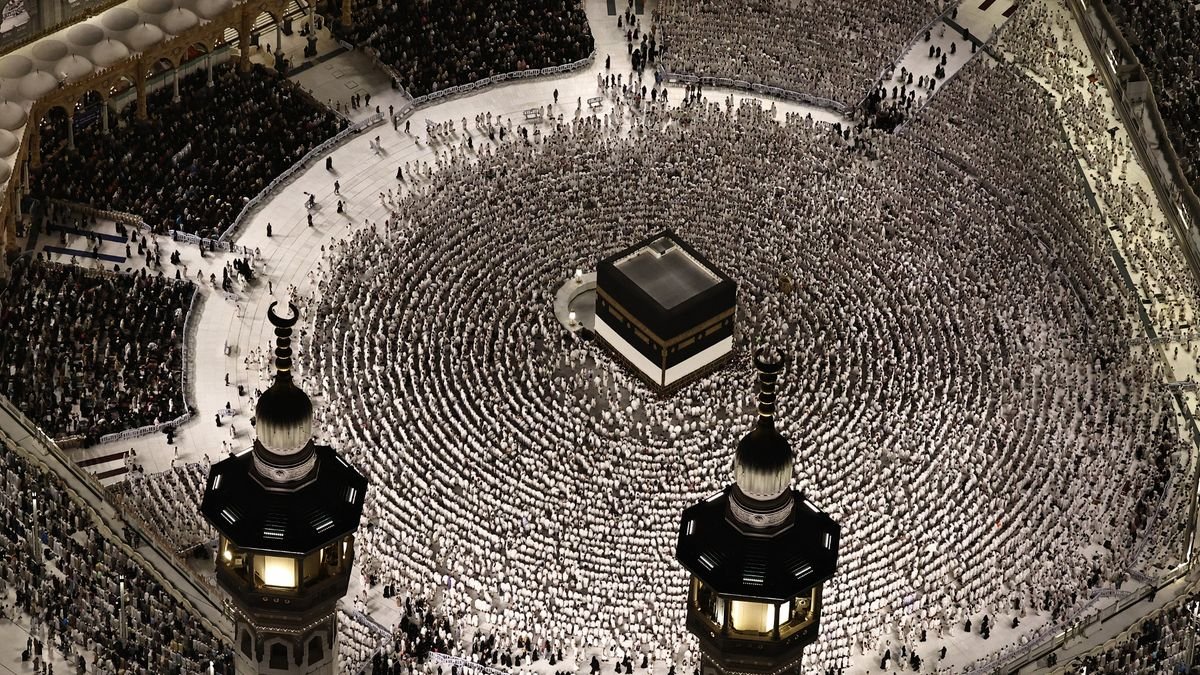

Muslims from various countries are currently converging in Saudi Arabia for the annual Hajj pilgrimage, a significant religious event drawing millions of worshippers to the holy city of Mecca. The pilgrimage, a fundamental aspect of Islam that many followers aspire to undertake at least once in their lives, involves a series of sacred rituals over several days.
During the Hajj, participants perform essential rites such as circling the revered Kaaba, a cube-shaped structure covered in black cloth at the heart of Mecca’s Grand Mosque, and gathering at Mount Arafat for prayers and contemplation. The pilgrimage coincides with Dhul Hujjah, the final month of the Islamic calendar, with Eid Al-Adha falling on May 27 for most attendees.
As the influx of pilgrims continues, accommodations, airports, and roads in Mecca are quickly filling up. Worshippers are advised to shield themselves from the scorching heat, stay hydrated, and avoid peak outdoor hours as temperatures soar to 44°C. The majority of Muslims will mark Eid al-Adha on May 27, a significant festival following the culmination of the Hajj period, also known as the “Feast of Sacrifice.”
Eid celebrations include Qurbani, the traditional sacrifice of livestock like sheep, goats, cows, or camels, symbolizing Prophet Ibrahim’s obedience to Allah. This act commemorates Prophet Ibrahim’s willingness to sacrifice his son Ismail as an expression of unwavering faith and submission to Allah, reflecting the highest level of devotion.
Pilgrims often endure long walks under intense heat while traveling between sacred sites in Mecca. The summer season in Gulf countries is expected to bring sweltering conditions, with temperatures ranging from 42°C to 44°C during the day and 26°C to 29°C at night. Before commencing the pilgrimage, worshippers prepare mentally and spiritually, entering a state of ritual purity known as Ihram, symbolized by wearing white garments signifying equality before Allah.
To maintain holiness during Hajj, certain activities like sexual relations, smoking, and body hair removal are prohibited. Completing Hajj in Mecca is one of the Five Pillars of Islam, mandatory for Muslims who are physically and financially capable. By visiting Mecca, the birthplace of Prophet Muhammad, and fulfilling religious obligations, pilgrims fulfill a significant religious duty.