


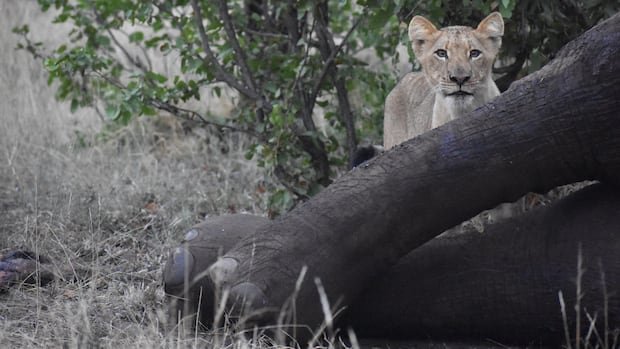

A recent study conducted by an international team of researchers in South Africa’s Kruger National Park has revealed the significant impact elephants have on the ecosystem even after they die. Known as “ecosystem engineers,” elephants shape the savannah while alive, but the study aimed to determine if their influence persists postmortem.
Lead researcher Courtney Reed explained that elephant carcasses contain a wealth of nutrients like carbon, nitrogen, and phosphorus. The decomposition process releases substantial nutrient pools into the soil, stimulating microbial activity and promoting the growth of nutrient-rich plants. This phenomenon attracts herbivores to the site for more than seven years after the elephants’ demise.
Initially, the high nutrient concentration from the carcasses can be detrimental to vegetation, creating bare patches or “cold spots” in biodiversity. However, as time progresses, the ecosystem begins to recover as excess ammonium dissipates, benefiting plant growth. The returning vegetation is nitrogen-rich, a crucial protein source for herbivores like zebra, buffalo, and rhinos that continue to graze on the site for years, leading to sustained herbivore activity.
Furthermore, grazing animals and scavengers contribute to enriching the soil through their waste, creating a positive feedback loop that influences the surroundings long after the elephant’s death. However, experts caution that the ecological legacy of elephant carcasses may not always be positive, especially in landscapes where human activities have disrupted the natural balance, potentially impacting biodiversity.