


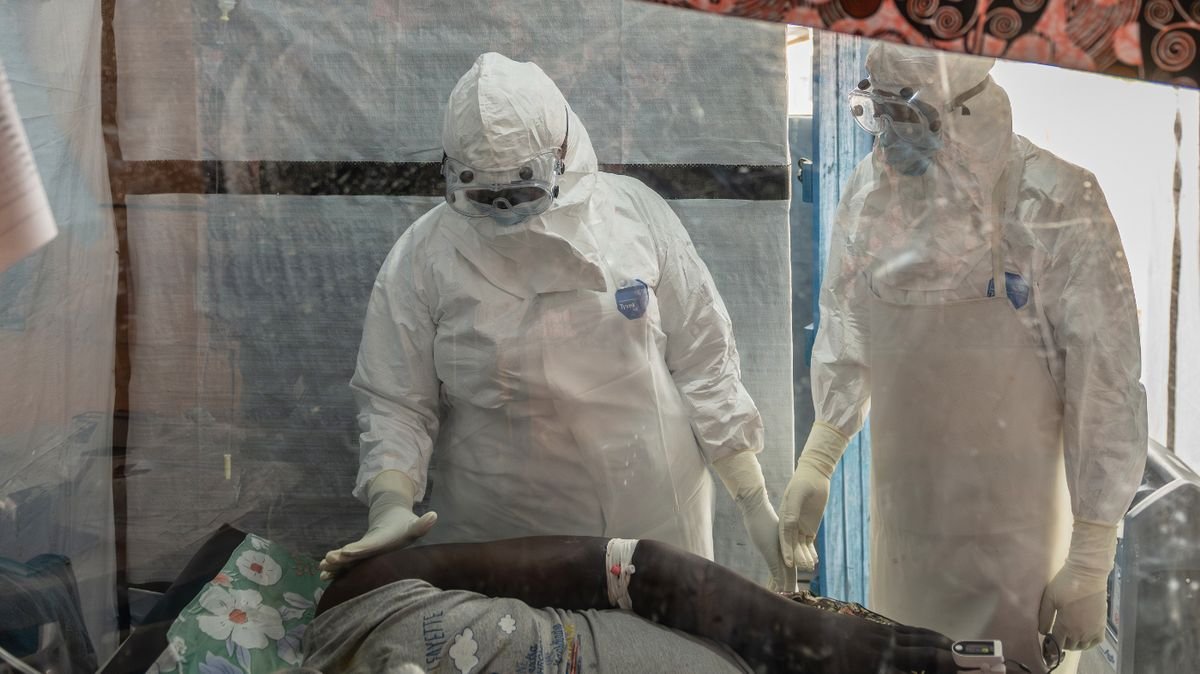

An outbreak of misinformation regarding Ebola in the Democratic Republic of the Congo (DRC) has caused fear among the public, leading them to falsely believe that medical professionals are intentionally spreading the virus, as cautioned by the Red Cross.
The International Committee of the Red Cross (ICRC) has raised concerns about a dangerous parallel epidemic exacerbating the Bundibugyo strain outbreak, responsible for numerous infections in the DRC and Uganda since May. Incidents of abuse towards volunteers, destruction of medical facilities, and attacks on hospitals by enraged locals have been reported, reflecting their struggle to comprehend the reality of the disease.
Misinformation has distorted public perception to the extent that individuals believe doctors are administering the virus through injections. Alex Lock, a communication officer with the ICRC in the DRC, emphasized the widespread mistrust within communities, with some denying the existence of the disease and others suspecting medical facilities of spreading Ebola.
In response, the ICRC has mobilized hundreds of volunteers, predominantly community members, to engage with and educate the public on the facts. The DRC Ministry of Health disclosed grim statistics with 1,094 confirmed cases, 277 related deaths, and 387 hospitalizations in isolation.
The most severely affected province, Ituri, accounts for the majority of confirmed cases, while North Kivu and South Kivu have reported fewer infections across different health zones. France recently confirmed its first Ebola cases in a doctor who had returned from a humanitarian mission in the DRC.
Although the World Health Organization (WHO) has declared the DRC outbreak a Public Health Emergency of International Concern (PHEIC), the global risk remains low, with WHO and French officials urging against panic. Despite the situation’s severity in the DRC, misinformation poses an escalating threat, as emphasized by Alex, who highlighted the universal vulnerability to the disease.
Efforts to combat the outbreak involve breaking the chain of contamination through early detection, prompt medical intervention, and crucial practices like safe burials. Communities are urged to actively participate in spreading accurate information to encourage appropriate responses and save lives by adopting necessary precautions.