


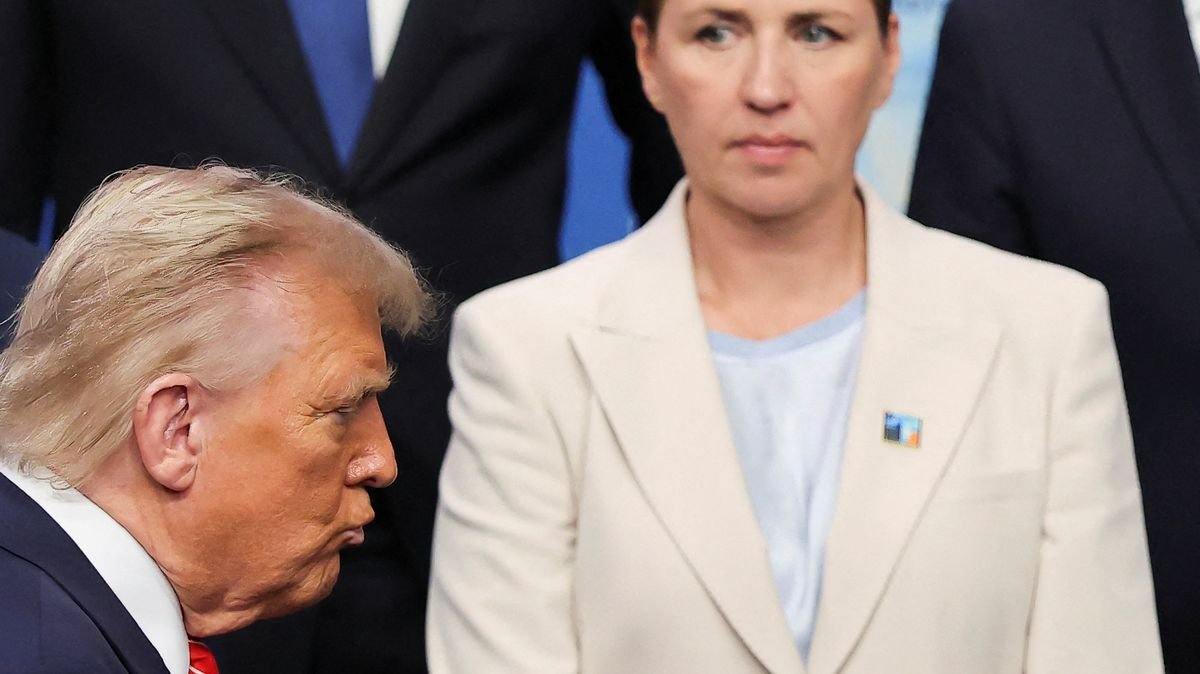

Denmark has firmly stated that Greenland is not up for sale following Donald Trump’s renewed push for the United States to assume control of the Arctic island. The US president stirred tensions during a Nato leaders’ meeting in Ankara by reiterating his belief that America should govern Greenland, a semi-autonomous Danish region.
Danish Prime Minister Mette Frederiksen affirmed her nation’s readiness to protect its territory and supported Greenland’s right to determine its own future. She emphasized, “We are prepared to defend every inch of Nato, including our own land.”
Frederiksen also underscored, “We expect that all, including our allies, will respect the Greenlandic people’s right to self-determination. Greenland is unequivocally not for sale.”
Despite the pushback from Denmark, Trump reiterated his stance that Greenland holds significant importance for the United States but not for Denmark. His remarks once again diverted attention from the intended unity demonstration among Nato allies, with leaders now confronted with fresh inquiries about his aspirations for the Danish territory.
Iceland’s Prime Minister, Kristrun Frostadottir, emphasized that Greenland belongs to its people and urged unity in the face of Russia, which she labeled as the primary threat. Nato Secretary General Mark Rutte sought to refocus discussions on the alliance, affirming the United States’ unwavering commitment to Nato amid the escalating tensions.
The summit was anticipated to center on defense spending and support for Ukraine, but Trump’s latest comments once more placed Greenland at the forefront of the agenda. Greenland, the largest island globally and a self-ruling territory within the Kingdom of Denmark, manages its domestic affairs while Denmark oversees its foreign and security policies.
Trump has persistently argued that the United States shoulders a disproportionate share of Nato’s defense burden and urged European allies to boost their military expenditures. New Nato data revealed that several member states are still struggling to meet the alliance’s 2% of GDP defense spending target, a point of contention repeatedly highlighted by the Trump administration.