


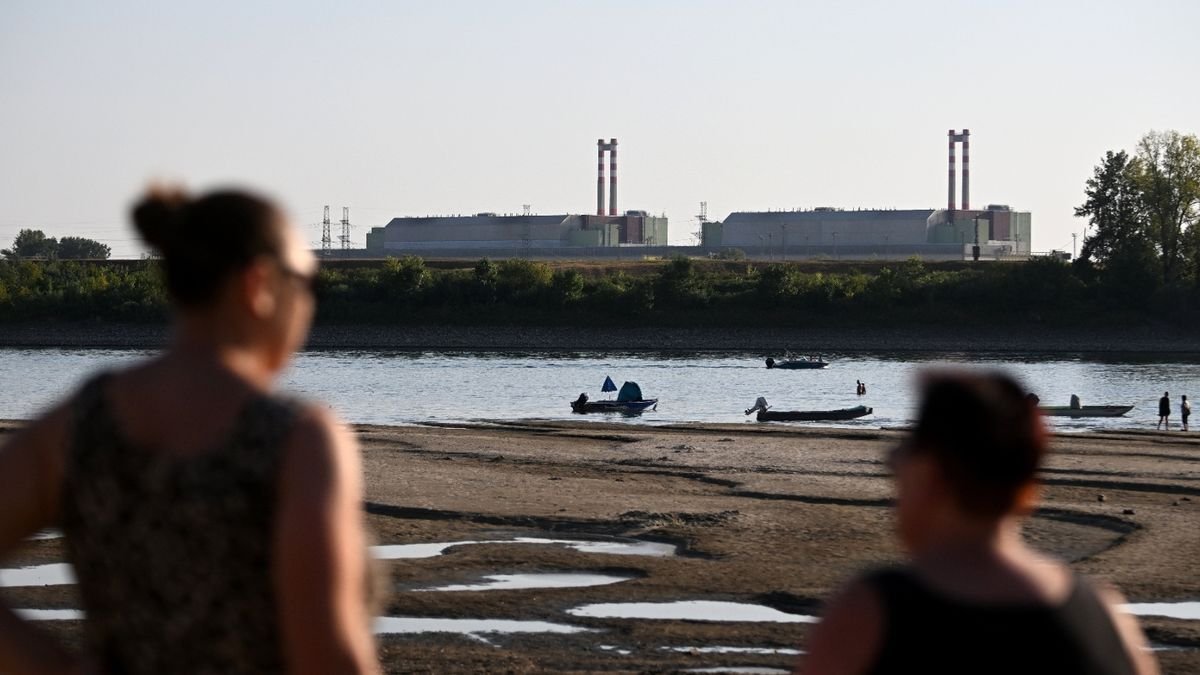

Hungary’s lone nuclear power facility is set to close down for the first time in its history due to abnormally low water levels in the Danube River caused by a severe drought. The country’s Prime Minister, Peter Magyar, warned of potential blackouts in the coming days as the Paks nuclear plant, located south of Budapest, faces the risk of shutting down due to the water shortage crisis.
The Paks plant heavily relies on water from the Danube for cooling its reactors, but with the river drying up, the plant’s operations have been significantly compromised. Generating approximately half of Hungary’s electricity, the plant has been operating at reduced capacity recently, producing only 965 megawatts compared to its usual output of 2,000 megawatts.
Magyar emphasized the critical nature of the situation in a Facebook video, stating that the next five days are crucial for the country’s energy stability. He assured the public that the planned shutdown of the plant can be executed safely without posing any risks to the population or the environment.
The ongoing drought, exacerbated by soaring temperatures across Europe, has led to a water crisis not only in Hungary but also in neighboring countries. To address the energy supply issue, Hungarian authorities have urged households and businesses to reduce their energy consumption voluntarily, particularly during peak demand hours.
In response to the escalating crisis, Hungary’s government is considering suspending parliamentary sessions to conserve energy. The financial implications of the energy crisis could amount to a significant loss for the country as energy imports become more expensive.
The European Commission is closely monitoring the situation in Hungary and is prepared to convene an emergency meeting to address the energy challenges. The impact of the Danube crisis has reverberated across Europe, with neighboring countries like Romania taking drastic measures to mitigate the effects of low water levels on critical infrastructure such as nuclear power plants.