


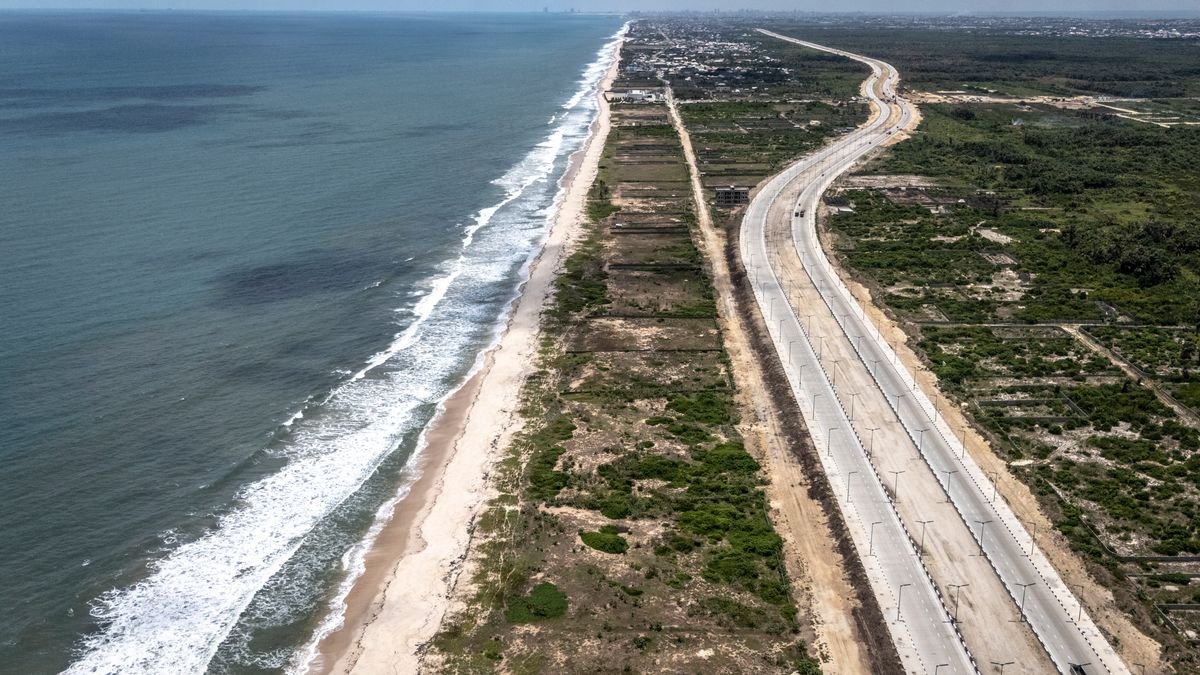

A significant project is underway to construct a massive coastal highway along the Atlantic coast, spanning 430 miles and connecting Nigeria’s bustling capital, Lagos, with Calabar city near the Cameroon border. The ambitious motorway, with an estimated cost of approximately £8.5 billion, aims to enhance Nigeria’s transportation infrastructure and promote tourism, as envisioned by Nigerian president Bola Tinubu.
Despite the grand vision for the project, environmentalists have raised serious concerns about its potential impact. Notably, the highway is expected to face challenges from rising sea levels in the coming years, prompting worries about its long-term sustainability. Nnimmo Bassey, a prominent environmental campaigner, has criticized the Lagos-Calabar Coastal Highway as a symbol of climate denial, emphasizing the rising sea levels along the Nigerian coastline as a pressing issue.
The vulnerability of Nigeria to sea level rise is evident in the case of Aiyetoro, a fishing port in Ondo State, which experienced significant losses due to an ocean surge in 2024. The population of Aiyetoro has drastically decreased over the years, highlighting the real and immediate impact of environmental changes.
President Tinubu remains steadfast in his commitment to the project, viewing it as a crucial element of his re-election campaign and a pivotal step towards Nigeria’s economic progress. The Lagos-Calabar Coastal Highway, set to be completed by 2028, is anticipated to become a key economic corridor in Africa, fostering economic growth and improving the transportation network, according to Orji Uchenna Orji, an adviser to Nigeria’s public works minister.
Funding for the project involves the government contributing 30% of the $12 billion budget, with the remaining costs borne by the contractor, Hitech Construction Company Ltd. Hitech plans to recoup its investment by collecting tolls on the highway for 15 years. Drawing from their experience with projects like Eko Atlantic, a futuristic mega-city near Lagos, Hitech intends to implement protective measures such as sea walls, mangrove belts, and dunes to mitigate environmental risks associated with the new highway.
However, concerns persist about the potential environmental impact of the highway, particularly in regions like Akwa Ibom State, where the project could disrupt protected areas and endanger wildlife. Nigeria has already suffered significant losses in its natural environment due to activities like oil and gas mining, raising fears of further degradation with the construction of the super-highway.
An environmental impact assessment conducted by Nigerian firm Natural Eco Capital suggests that the Lagos-Calabar Coastal Highway may withstand a sea level rise of 0.5 meters in the Lagos region. Nevertheless, projections indicate that global warming trends could lead to more severe sea level rises in the future, underscoring the need for robust environmental planning and sustainable development practices moving forward.