


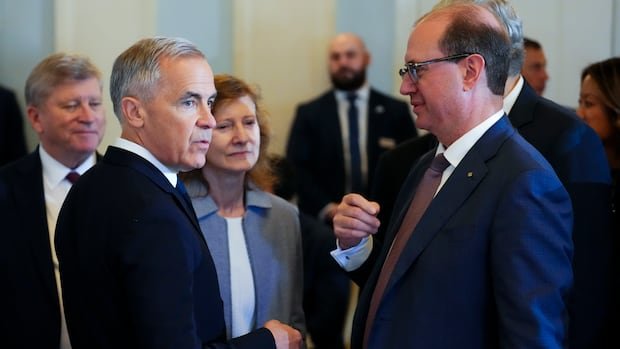

Canada’s envoy to the U.S. emphasized the need to reintroduce American alcohol into Canadian markets as a crucial step in finalizing a trade deal with the U.S. to avoid potential new tariffs, as per information obtained by CBC News. Mark Wiseman delivered this message during a comprehensive briefing on the trade agreement to around 100 members of the Canada-U.S. trade council.
The council, comprising businesses, industry associations, and labor groups, also received input from a former Canadian chief trade negotiator expressing reservations about the deal. Canadian negotiators are currently in Washington engaging in urgent discussions with the Trump administration to prevent the imposition of 50% tariffs on Canadian exports, with the deadline set for midnight Friday.
Wiseman shared details of a preliminary agreement to avert the tariffs during his presentation, as relayed by three sources on the call. The potential deal involves reducing tariffs on steel, aluminum, and automobiles, as well as modifying the allocation of dairy import licenses. However, concerns have been raised by the dairy industry regarding the possible influx of American dairy products into the Canadian market.
Following Wiseman’s departure from the call, former chief trade negotiator Steve Verheul cautioned the council about the risks associated with the deal. Verheul highlighted the immediate threat posed by the latest Section 338 tariffs imposed by the Trump administration and warned against making concessions that could jeopardize Canada’s long-term interests.
Verheul stressed the importance of maintaining leverage during the negotiations, suggesting that the U.S. industry largely supports the continuation of duty-free trade under the Canada-U.S.-Mexico Agreement. He also raised concerns about the lack of consultation with affected industries and the need for clarity on Canada’s stance regarding sectoral tariffs.
The potential agreement includes reductions in steel and aluminum tariffs from 50% to 25% and a decrease in tariffs on Canadian-built vehicles from 25% to 15%, with provisions for American content. The Canadian auto sector expressed disappointment over the absence of exemptions for Canadian-made content from U.S. tariffs, which Wiseman indicated would be addressed in future CUSMA discussions.
Verheul emphasized the necessity for Canada to reject the sectoral tariffs proposed by the Trump administration and maintain a focus on achieving duty-free trade in the upcoming CUSMA review. He also underscored the importance of transparent consultations with industry stakeholders and the potential challenges of reversing tariff agreements once in place.
The call also featured insights from former finance minister Chrystia Freeland, who raised concerns about the permanence of agreed tariffs and the challenges of their removal in the event of future policy changes in Washington. Participants expressed frustration over the lack of detailed briefings provided to Canadian industry stakeholders compared to their U.S. counterparts.
Overall, the discussions highlighted the complexities and stakes involved in the ongoing trade negotiations between Canada and the U.S., underscoring the critical decisions facing both nations as they strive to reach a mutually beneficial agreement.