


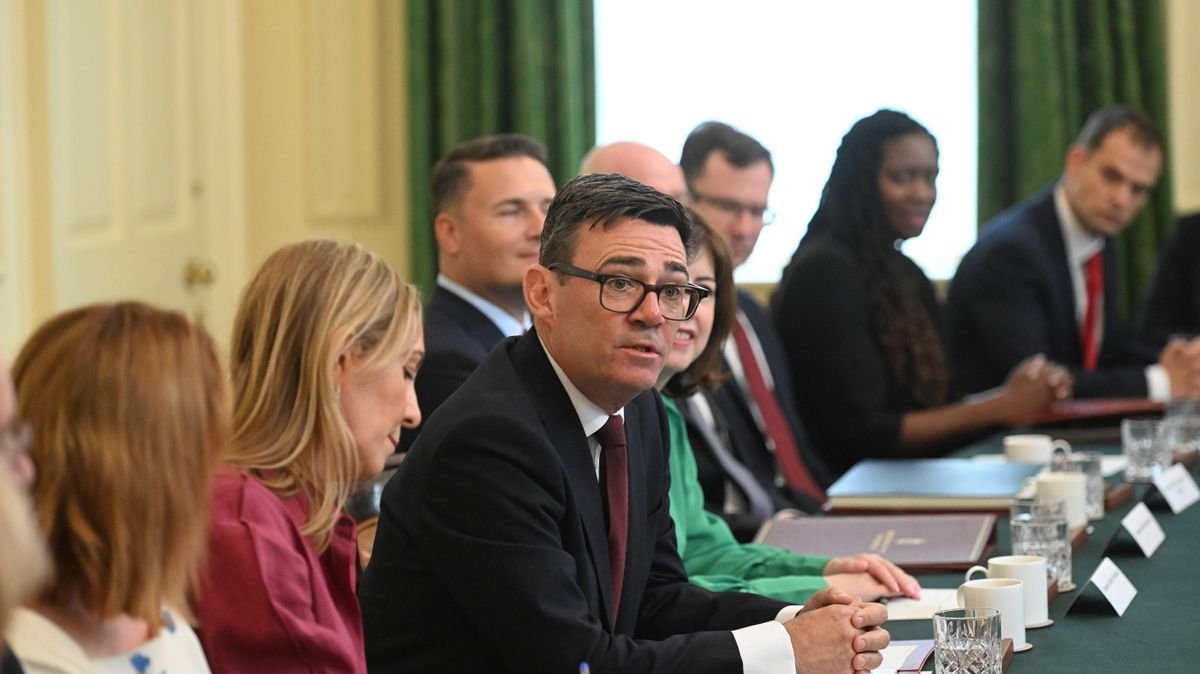

Andy Burnham has swiftly reorganized his Cabinet over a whirlwind two days, replacing Keir Starmer’s allies with new notable appointments, alongside engaging with global leaders and making numerous announcements. Describing it as “a second chance at a first impression,” Burnham emphasized the urgency for Labour to reconnect with disenchanted voters.
During the Cabinet meeting at No10, Burnham likened his team’s unity to a football team heading onto the pitch, reflecting his strategic approach as Prime Minister. The extensive removal of Starmer’s supporters, labeled by some as the “night of the long eyelashes,” included the dismissal of prominent ministers like Steve Reed, David Lammy, and Liz Kendall.
Rachel Reeves’ ties to the faltering Starmer project led to her departure as Chancellor, paving the way for John Healey to take on the crucial role. Burnham’s surprising selection of Healey, known for his competence and pragmatism, indicates a deliberate move to steer economic policies from No10.
Healey’s appointment aligns with Burnham’s priorities, particularly on industrial issues and housing reforms. The choice of Healey over potential candidates like Ed Miliband or Shabana Mahmood underscores Burnham’s pursuit of a balanced and reliable figure to execute his agenda.
The reshuffle also saw key figures like Louise Haigh, Miatta Fahnbulleh, and Lisa Nandy assuming significant roles within the Government, emphasizing Burnham’s focus on rewarding loyalty and injecting fresh perspectives into his Cabinet. The strategic appointments reflect Burnham’s intention to consolidate power and drive transformative changes across various sectors.
By assembling a Cabinet that blends experience with new voices, Burnham is signaling a clear and singular vision for his leadership. The geographical distribution of Cabinet members, with a notable emphasis on Northern representation, further underscores Burnham’s commitment to regional inclusivity and strategic governance.