


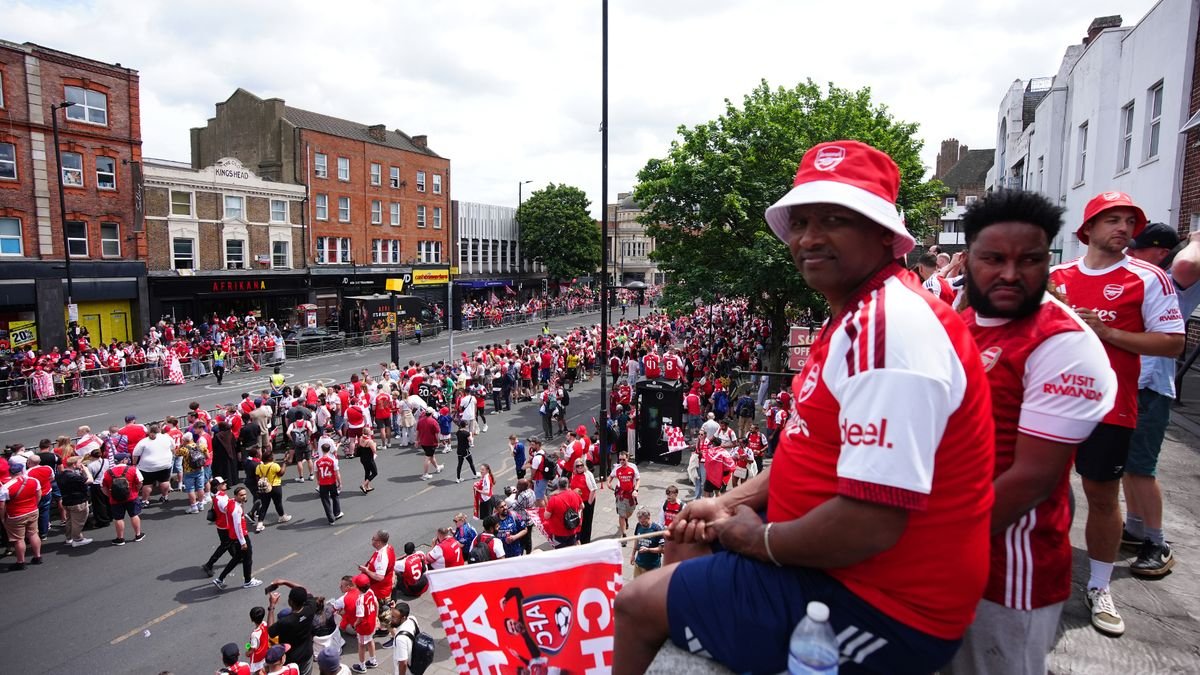

The surge of enthusiasm and community spirit following Arsenal’s recent title win has been a remarkable sight, resonating globally and across social media platforms. In the wake of the club’s first championship victory in 22 years, it has become apparent that fake Arsenal fans are not hard to find, with genuine supporters standing out among the crowd.
Notable figures, including politicians and celebrities, have eagerly embraced the opportunity to associate themselves with the success of one of the Premier League’s most digitally prominent teams. While some, like Sir Keir Starmer, have long-standing and authentic ties to the club, others, such as Emily Thornberry, have faced criticism for their less genuine connections.
The celebratory atmosphere in London, extending to diverse locations worldwide, has highlighted the unifying power of football, transcending barriers of age, race, and culture. Despite the joyous scenes, the recent stabbings serve as a sobering reminder of the potential risks associated with large gatherings.
The positive impact of football in fostering unity and breaking down societal divides has been evident, offering a reprieve from the discord and uncertainty prevalent in today’s world. Just as Arsenal’s success has brought people together, the upcoming World Cup is poised to further showcase the unifying influence of the beautiful game.