


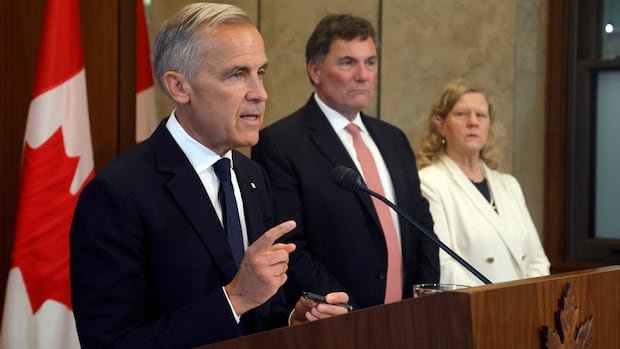

After a tumultuous week filled with tensions and negotiations, Prime Minister Mark Carney stepped forward on Saturday morning to elucidate the reasons behind the decision to walk away from an unfavorable trade deal with the United States and to shed light on the next steps.
“Canada has been actively engaged in negotiating a comprehensive trade agreement with the United States for over a year,” Carney stated. “We have approached these negotiations with pragmatism, patience, and persistence.”
However, the tables turned when last-minute alterations proposed by the American side were deemed unjust, economically unsound, and cast doubt on the reliability of any potential deal, as conveyed by Carney in a statement released almost at midnight on Friday.
Shortly before this, U.S. Trade Representative Jamieson Greer informed the press in a conference call that Canada had opted not to finalize an agreement.
While uncertainties loomed, with speculation and leaks circulating, Carney faced the challenge of convincing Canadians, who may be reluctant to settle for anything less than unconditional surrender from the U.S., that the deal being considered was viable.
Concerns were voiced by Steve Verheul, Canada’s former chief negotiator, who feared that Canada had conceded too much. Similarly, former Foreign Affairs Minister Chrystia Freeland expressed apprehension that any implicit approval of U.S. tariffs could place Canada in a precarious position.
Given the circumstances, the imposition of new tariffs by President Trump is anticipated to have significant repercussions, potentially resulting in up to 90,000 job losses for Canadians, according to economist Trevor Tombe from the University of Calgary.
The situation has left both Canadian and American officials in limbo, facing an uncertain future akin to Wile E. Coyote hanging in mid-air with potentially unpleasant outcomes.
Reflecting on the evolving dynamics, a senior official in the Trump administration highlighted a shift in American foreign policy towards ensuring that the U.S. is not taken for granted in international relations, emphasizing the need to recalibrate partnerships and agreements.
The evolving landscape suggests that the era of enduring trade pacts is fading, characterized by persistent uncertainty rather than a fleeting challenge, as echoed by Conservative strategist Kory Teneycke.
As discussions about the future course ensue, Carney underscored the recognition that the U.S. has undergone transformations, emphasizing the need for fair agreements that Canadians and their businesses can rely on.
In navigating the aftermath of failed negotiations, questions arise concerning the potential for retaliation, the prospect of counter-tariffs, and the roadmap to resume talks. Carney’s stance on prioritizing no deal over a bad deal aligns with Ontario Premier Doug Ford’s sentiments, although the path forward remains complex and uncertain.