


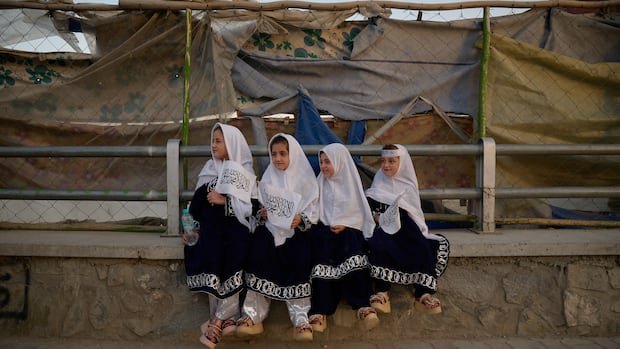

Five years have passed since the Taliban assumed power in Afghanistan following the collapse of the government in August 2021. During this time, Canada has provided refuge to more than 60,000 Afghan individuals.
Among those who found sanctuary in Canada is Farkhunda Hashimy. She and her family arrived in Saskatoon in 2023 after fleeing Afghanistan, where Hashimy was a high school student in Kabul before the Taliban’s regime change.
Hashimy reminisces about the freedoms she once enjoyed in Afghanistan, such as the right to education and the opportunity to pursue a career. However, after the Taliban seized control, these liberties were stripped away, leaving young women like Hashimy without access to education or the ability to work.
According to the United Nations, the Taliban has imposed over 100 decrees affecting the daily lives of women and girls in Afghanistan. Prior to the Taliban’s rule, the country boasted over 100,000 women in higher education, a stark contrast to the current ban on girls continuing education beyond Grade 6.
Natasha Arnpriester, a senior legal counsel at the Open Society Justice Initiative, is actively building a case against the Taliban for its actions in the International Court of Justice. She highlights the stark contrast in women’s rights before and after the Taliban’s rule, emphasizing the significant regression in gender equality.
Hashimy’s aspirations of attending university and pursuing a career in athletics were shattered post-Taliban takeover. The restrictions imposed by the Taliban have not only hindered educational opportunities but have also severely limited women’s ability to work and access healthcare.
Having settled in Canada, Hashimy reflects on the stark difference between her new life and the plight of women and girls still living under Taliban rule in Afghanistan. She expresses deep concern and solidarity for those left behind, emphasizing the importance of empowering herself to eventually aid those facing oppression.