



The seaside in Gaza, resembling a beach getaway rather than a battlefield, offers Palestinians a brief respite from the ongoing conflict now in its third year. Despite discussions of peace talks and withdrawals, there is widespread skepticism that the war has truly ended.
Israeli airstrikes continue to strike Gaza almost daily, targeting alleged Hamas militants, while Israeli forces advance westward, encroaching on Palestinian territory and crowding two million Palestinians into an increasingly confined space near the Mediterranean Sea.
Although an agreement last October stipulated that Israel would pull back behind the “yellow line,” representing less than 50% of the border territory, the Israeli army now controls over 60%, citing operational security reasons. Prime Minister Benjamin Netanyahu has directed further expansion to 70%.
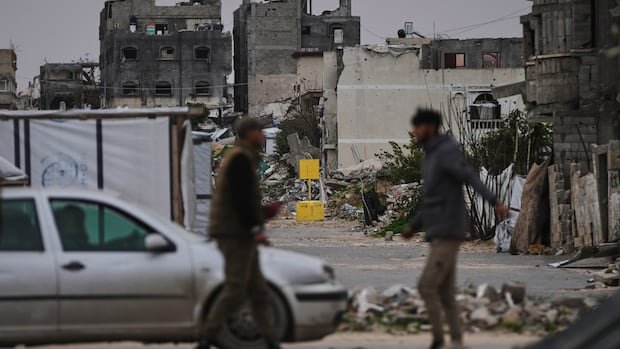
The movement of the yellow line is visually confirmed by satellite images and eyewitness reports, with Palestinians waking up to find the markers closer to their homes each day. The displacement of families and destruction of neighborhoods have left many in fear and uncertainty.
Since the ceasefire began last fall, over 1,200 Palestinians have lost their lives, adding to the staggering death toll of more than 70,000 since the conflict began in 2023. The systematic destruction of residential buildings and the construction of military compounds have raised concerns among UN experts.
Despite Israeli claims that the yellow line movement aligns with the ceasefire deal and aims to enhance security, many Palestinians feel pressured to leave Gaza as settler groups and politicians advocate for annexation and settlement expansion in the region.
With the Israeli elections approaching and political tensions high, the future remains uncertain for Palestinians caught between the advancing yellow line and the looming presence of Israeli forces.