


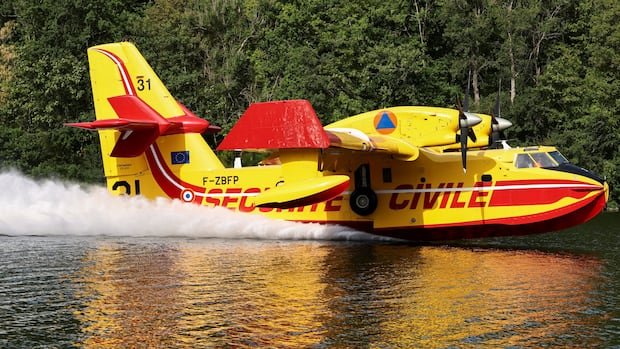

Amid a challenging wildfire season in Canada, the United States, and Europe, there is mounting pressure on the manufacturer of the Canadair “Super Scooper” water bombers to ramp up production. De Havilland, based in Calgary, has decided to restart Canadair production after acquiring the program from Bombardier in 2015. The iconic aircraft, known for its hand-built craftsmanship in Calgary, is witnessing a revival in production, with the first two planes set to be completed and delivered by early 2028.
The Canadair planes, designed in the 1960s for fighting wildfires in the vast Canadian wilderness, boast a unique capability to scoop water from lakes, rivers, and oceans swiftly. Political leaders in Canada and Europe are eager to acquire these aircraft due to current shortages and aging firefighting fleets. The latest version of the Super Scooper maintains the traditional features of Canadair aircraft, with a 30-meter wingspan, a 6,100-liter water tank, and the recognizable yellow and red exterior.
Recent criticism from opposition politicians in France and Spain regarding the lack of operational Canadairs has put pressure on the respective governments to address the issue. Canadian premiers, including Wab Kinew from Manitoba, have expressed concerns over the shortage of water bombers in successive summers. De Havilland is now contemplating the construction of a second production line to meet the soaring demand.
The company is collaborating with provincial and federal authorities to secure a firm order for 50 aircraft from Ottawa, a move that would prompt the initiation of a second production line. De Havilland’s current production capacity allows for about 10 water bombers annually, with plans to double the output to 20 per year with a second line. The company faces a backlog of orders, with delivery timelines for new orders stretching to 2032-2033.
There is growing global demand for Canadair water bombers, driven by the escalating wildfire risks posed by climate change. Failure to meet this demand could open the door for foreign competitors to develop their firefighting aircraft, potentially threatening Canadian manufacturing jobs. To safeguard its position in the market, De Havilland is considering expanding its production capacity to meet the urgent need for these vital firefighting assets.
A Senate report released in June recommended the establishment of a national fleet of modern firefighting aircraft to address the increasing wildfire challenges in Canada. While aerial firefighting units play a crucial role in wildfire management, they are just one component of a comprehensive strategy that includes prevention and mitigation efforts. The federal government is committed to enhancing the country’s wildfire response capabilities to combat the escalating threats posed by intense wildfire seasons.