


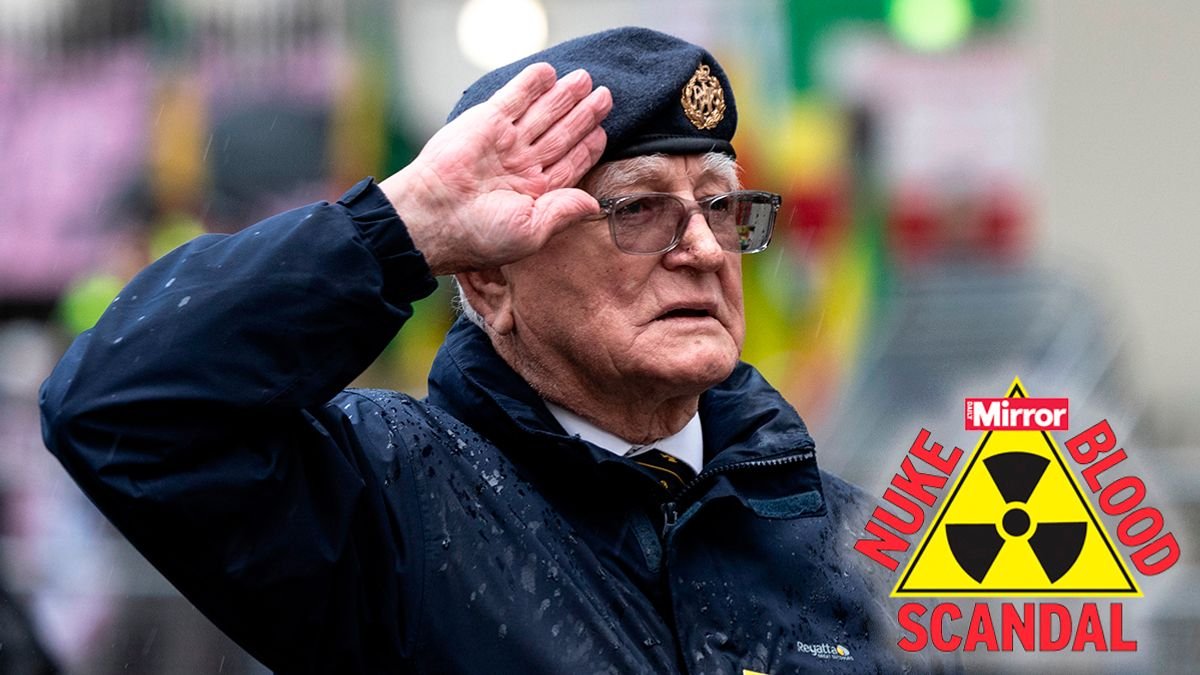

The Ministry of Defence has acknowledged that a clandestine government facility accumulated medical records of nuclear test veterans. Approximately 50,000 physical files are currently stored in a controlled environment facility, collected by scientists at Porton Down. Despite a two-year investigation into missing medical records of veterans who underwent medical monitoring during Cold War nuclear tests, these files remain unexamined.
Rebecca Long-Bailey, an MP, emphasized the importance of determining the content, purpose, and relevance of these records to address the longstanding issue of missing files concerning veterans. A group of MPs from various political parties have urged Defence Secretary Wes Streeting to conduct a thorough examination of the archive. Many veterans who participated in Britain’s 45 atomic experiments have expressed concerns over the absence of their medical records.
In 2022, the Mirror uncovered evidence revealing that thousands of veterans received blood, urine, and thyroid tests, as well as chest x-rays, during their service in the weapons trials. Despite initial orders to document blood test results comprehensively, a review conducted in 2024 failed to locate most records, assuming that the tests were either not conducted or had been destroyed. However, a warehouse in Swadlincote, Derbyshire, containing 50,000 paper records related to historic radiation exposure was identified. The review suggested that the archive may hold medical records of additional nuclear test veterans.
The archive, officially known as UHR ‘DSTL Historic Radiation,’ was established by the Defence Science Technology Laboratory, commonly referred to as Porton Down, a classified research facility specializing in biological and chemical studies. Currently, the physical files are managed by a private contractor named Restore, while a digital copy is maintained by Defence Radiation Protection Services, a division of the Ministry of Defence.
Despite a merger between DRPS and the Atomic Weapons Establishment two years ago, access to the files requires specific permissions from Defence Business Services. The lack of clarity on when the archives will be searched has raised concerns among veterans. John Morris, an 88-year-old veteran, highlighted the bureaucratic challenges hindering access to potentially critical medical information stored in the archive.
An MOD spokesperson emphasized the government’s appreciation for the contributions of service personnel, scientists, and civilians involved in the UK’s nuclear testing program. The comprehensive review commissioned by the government examined over 100,000 items and records across relevant organizations, addressing potential gaps and limitations in the surviving records. The review concluded that there was no intentional concealment of information, despite the identification of additional material in the archive.