



Reform advocate Nigel Farage’s proposal for the Royal Navy to deter small boat crossings has faced strong criticism for being highly challenging, logistically intricate, and a misallocation of essential military resources.
The concept, often ridiculed, may resonate with far-right ideologies of using the military to safeguard the UK from perceived threats, but experts argue that it would pose significant risks and impracticalities. Maritime regulations mandate vessels to prioritize saving lives at sea, and operational realities, as observed firsthand by the Daily Mirror, highlight the near impossibility of executing such a plan given fluctuating conditions and resource constraints.
This proposal comes at a time when the Royal Navy is grappling with a shortage of ships and inadequate resources to address genuine threats confronting the UK. A source from Western intelligence conveyed concerns about the attempt to frame the migrant situation as a military invasion, emphasizing the complexities of maritime operations and the uncertainties involved. The current global geopolitical tensions, including conflicts in Ukraine and the Middle East, demand focused military attention, raising doubts about the feasibility of this approach.
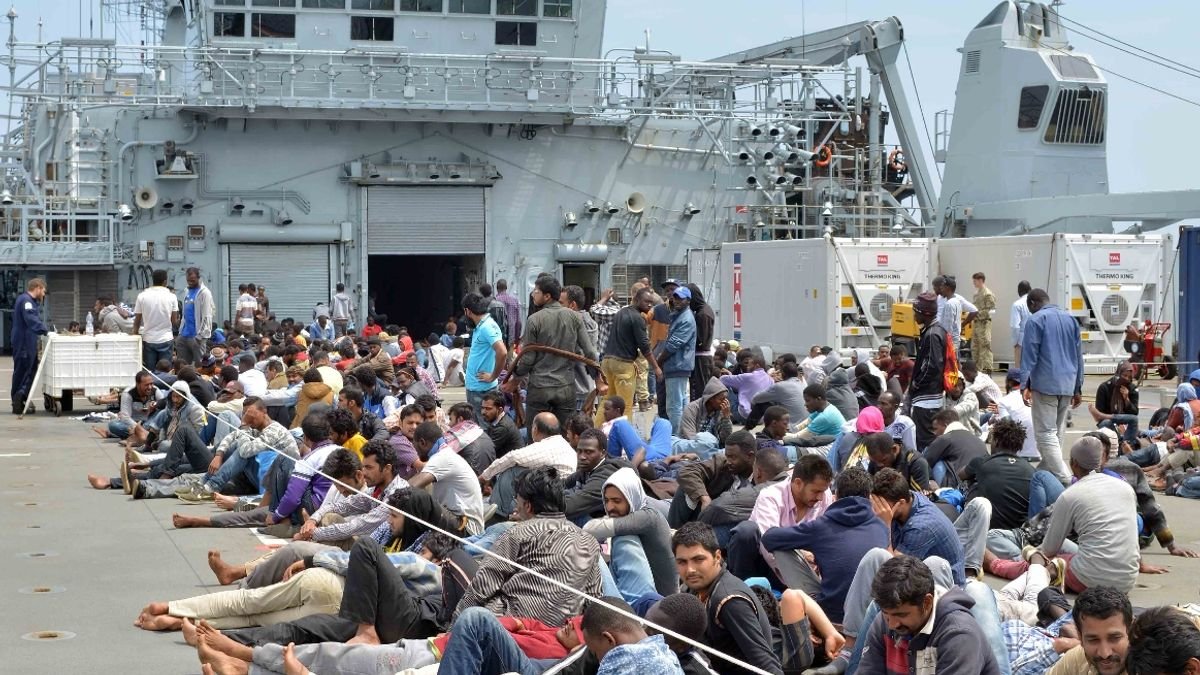
In 2015, a Mirror team participated in a multinational mission to intercept small migrant boats crossing from Libya to Italy, rescuing 1,200 individuals in a complex and time-consuming operation. The intense rescue effort involved Royal Marines and Royal Navy sailors from HMS Bulwark, illustrating the intricate nature of high-seas rescue missions.
The intricate logistics of saving lives at sea contrast starkly with the proposed use of the military to address migrant crossings in the English Channel. Redirecting Royal Navy vessels to handle such operations would be a daunting task, particularly with limited resources and the recent decommissioning of HMS Bulwark, an amphibious assault ship.
Former Royal Navy Commander Tom Sharpe suggested utilizing civilian ferries instead of military assets for such operations, emphasizing the impracticality and inhumanity of the proposed approach. The military’s primary focus, amidst numerous maritime challenges, should be on critical security concerns rather than diverting resources to address migrant crossings.