


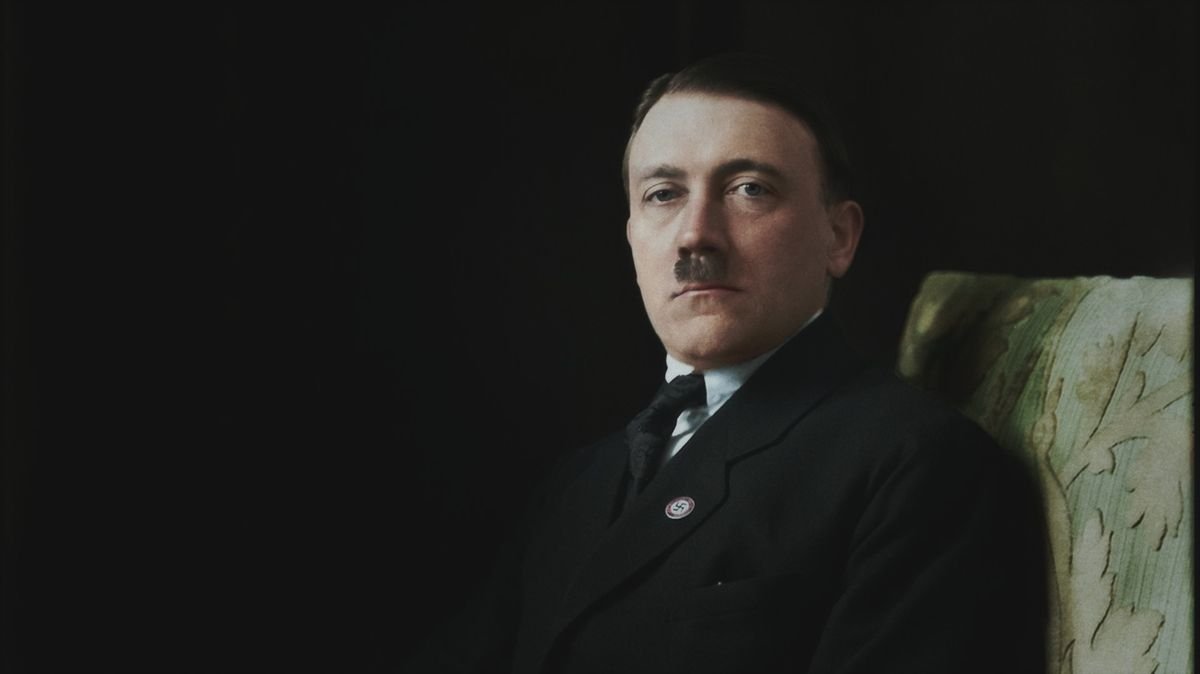

Helene Hanfstaengl found herself captivated by a young man with piercing blue eyes who knelt before her and rested his head on her lap. Unbeknownst to her, she was face-to-face with a sinister figure. Reflecting on the encounter, Helene shared how the man, later revealed to be Adolf Hitler, displayed charm and charisma. Hitler expressed his dedication to his country when Helene suggested he find a wife, stating he could never marry due to his commitment to his nation.
A new Channel 4 series titled Dictator: The Hitler Interviews sheds light on Hitler’s persona through interviews with his loyal followers, including New York-born Helene Hanfstaengl, wife of Ernst “Putzi” Hanfstaengl. Putzi, a Harvard-educated German-American businessman, became an early supporter and confidante of Hitler, playing a significant role in shaping the Nazi public image.
Recalling their initial meeting after Hitler assumed leadership of the Nazi Party in 1921, Putzi described being drawn to Hitler’s oratory skills and commanding presence. Helene mentioned Hitler’s apparent affection for her and his captivating blue eyes, along with his Austrian mannerisms such as hand-kissing.
Hitler’s unwavering self-assurance and dominance in conversations left a lasting impression on those around him. By 1923, Hitler’s ambition to strengthen the Nazi Party was evident, influenced by the radicalization following Germany’s defeat in World War I. Elisabeth Popp, who had a unique perspective on Hitler from his early days, highlighted his personal vendetta against the Jews, which evolved into a broader ideology.
Winifred Wagner, daughter-in-law of composer Richard Wagner and a close confidante of Hitler, shared her admiration for him even after the war. She described a special bond with Hitler, referring to him as “Our Blessed Adolf.” Despite undergoing denazification, she remained loyal to him until her passing in 1980.
Helene’s chilling account of Hitler’s failed insurrection in 1923 revealed a moment where she prevented him from taking his own life. Believing they were saving Germany by saving Hitler, Helene and Putzi’s actions had lasting consequences. Hitler’s rise to power, with 13 million Germans voting for him in 1932, marked a turning point in history.
Rather than facing trial for numerous atrocities, including the Holocaust and other heinous crimes, Hitler evaded justice by taking his own life in 1945. The Nuremberg Trials brought some Nazi officials to account, with mixed perspectives on Hitler’s legacy. Baldur von Schirach, who spent time in prison for his role in Nazi crimes, acknowledged Hitler’s genius but also recognized his fatal flaws.
As authoritarian regimes resurface globally, the cautionary tales from history, such as Putzi’s insights, serve as reminders of the dangers posed by unchecked power. Hitler’s path from democratic elections to dictatorship serves as a stark warning about the consequences of enabling authoritarian leaders.