


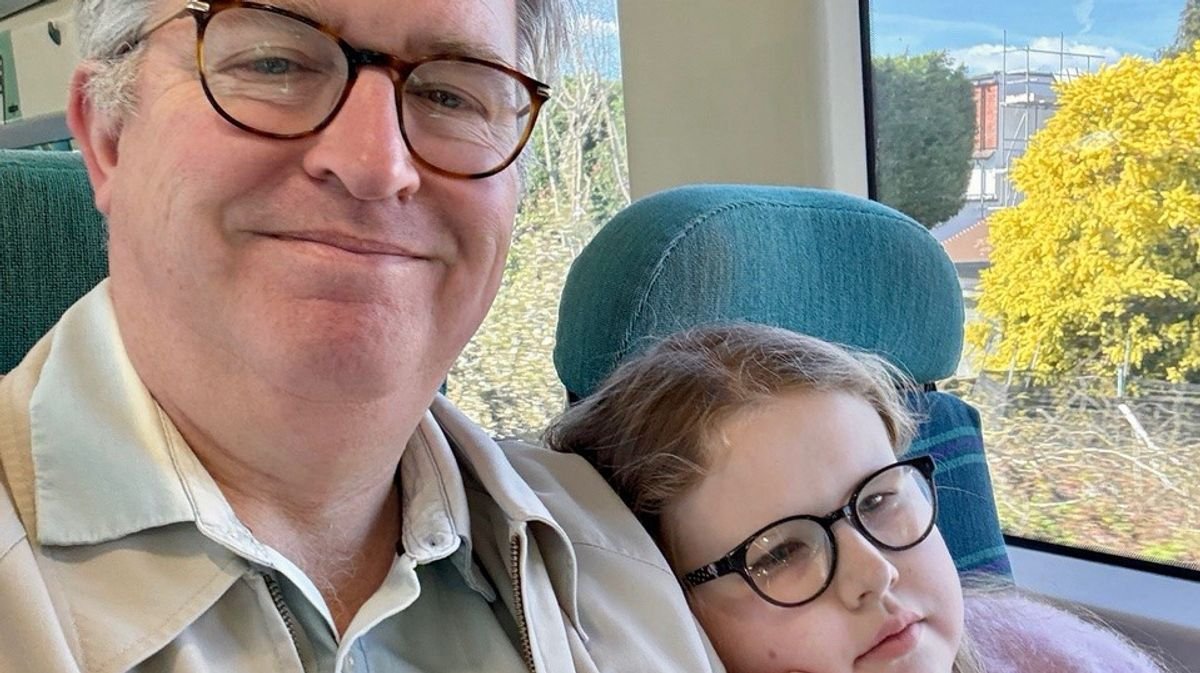

An 11-year-old girl from North Acton, west London, has made history as the first Brit to undergo groundbreaking gene therapy for a rare condition that leads to blindness in early adulthood. Catherine L’Estrange was diagnosed with Bardet-Biedl syndrome (BBS) as an infant and recently received the innovative treatment, which had only been administered to one other person globally. BBS, caused by a gene mutation, results in gradual vision loss as retinal cells deteriorate. To preserve Catherine’s eyesight, surgeons inserted healthy copies of the gene directly into her eye.
Catherine expressed hope that the therapy would allow her to continue seeing her surroundings and indulge in her love for reading. The procedure involved extracting the gel inside her eye and introducing healthy copies of the BBS10 gene into the retina, the light-sensitive tissue at the eye’s rear. Catherine’s father, Reverend Timothy L’Estrange, expressed gratitude for the opportunity to save his daughter’s vision, describing it as potentially life-changing for her.
BBS affects approximately one in 100,000 births in the UK and is associated with not only vision impairment but also kidney issues, learning challenges, and obesity. MeiraGTx, a biotechnology company, developed the gene therapy administered to Catherine during a one-hour operation at St Helier Hospital in March. According to Neruban Kumaran, a consultant eye surgeon, providing a healthy gene copy aims to safeguard retinal cells, potentially stabilizing or enhancing vision.
St. Helier’s medical team collaborated with specialists from Great Ormond Street and Moorfields Eye Hospital to identify eligible young patients with the BBS10 gene mutation. Reverend L’Estrange highlighted that Catherine’s early diagnosis as an infant facilitated preparations for her visual decline, which began with night blindness and progressed to color blindness and peripheral vision loss. The family was pleasantly surprised when the treatment became available earlier than anticipated, with Catherine being among the first worldwide to receive it.
Following the gene therapy on one of Catherine’s eyes, the medical team is awaiting the outcome. Apart from Catherine, the treatment has been administered to another child with BBS, showing promising initial results such as improved vision in dim lighting. While the full effects may take years to manifest, early feedback from patients and families has been encouraging, providing hope for maintaining or enhancing vision in individuals with BBS.