


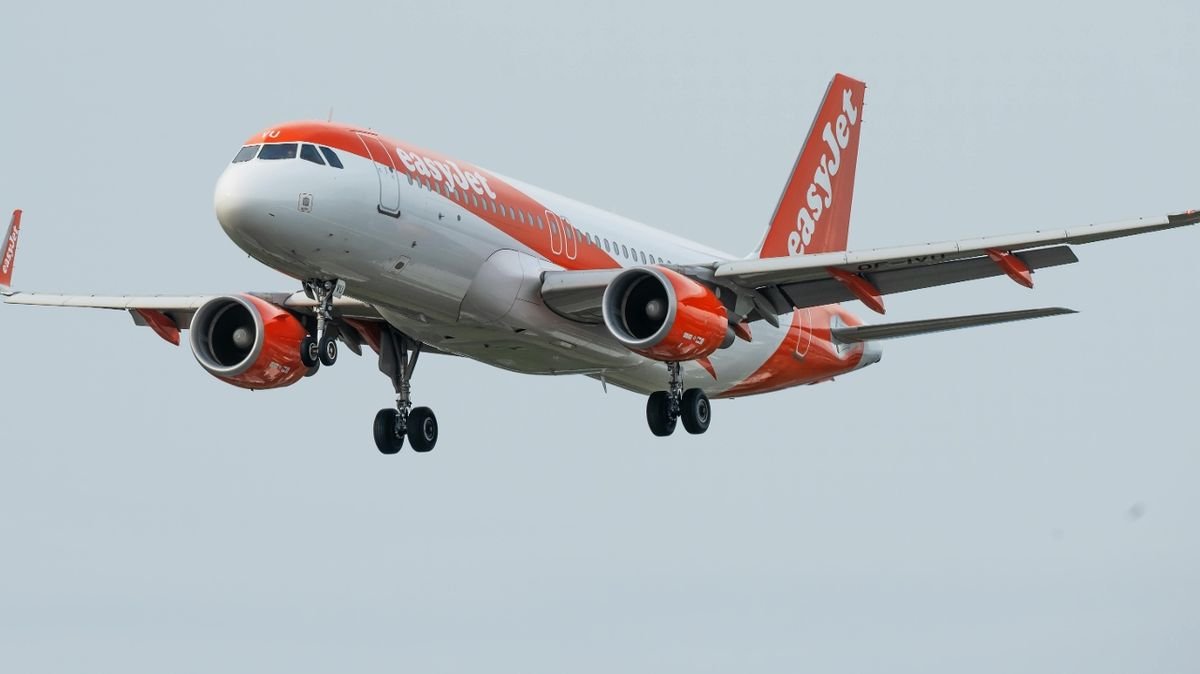

An emergency was declared by an easyJet flight approaching Manchester Airport. Passengers were on a short journey from Amsterdam when the crew aboard the Airbus A320-200 alerted mid-air and the aircraft began circling in a holding pattern.
The pilot of easyJet flight U22164 from Schiphol Airport altered its normal course into Manchester Airport, circling to the north of the city, as reported by flight trackers. Approximately an hour after takeoff, the flight crew announced the emergency while preparing to descend into Manchester, according to Air Live.
A standard emergency signal, squawk code 7700, was issued to notify air traffic control of an onboard emergency, granting priority for landing with emergency services on standby. This code is a general emergency indicator without specifying the exact issue onboard, serving as a universal alert for any non-hijacking (7500) or radio failure (7600) emergency.
Following the emergency alert, the plane was directed onto the approach path and safely landed on Runway 05R at Manchester Airport without any further incidents. Despite circling the airport, the aircraft landed at 3:05 pm, 45 minutes later than the originally scheduled arrival time of 2:20 pm.
An easyJet spokesperson informed The Mirror that a priority landing was requested due to a “technical issue.” The airline’s statement mentioned that Flight EZY2164 from Amsterdam to Manchester requested priority landing due to a technical problem, ensuring a normal landing with the safety of passengers and crew as the main priority.
Earlier in the month, numerous UK flights experienced delays due to an air traffic control issue in the UK. On July 7, widespread disruptions occurred across UK airspace following a problem at the Met Office, causing the National Air Traffic Services (NATS) not to receive vital weather information.
Ryanair encountered delays in 155 flights, affecting nearly 30,000 passengers with delays up to three hours, while EasyJet experienced more significant impacts with 253 flights delayed, amounting to 13% of its total planned departures.
NATS spokesperson acknowledged a technical issue overnight from the Met Office, hampering the receipt of essential weather data for air traffic controllers and pilots. The issue led to early air traffic restrictions, later resolved, with ongoing collaboration between NATS and the Met Office to address the problem.