


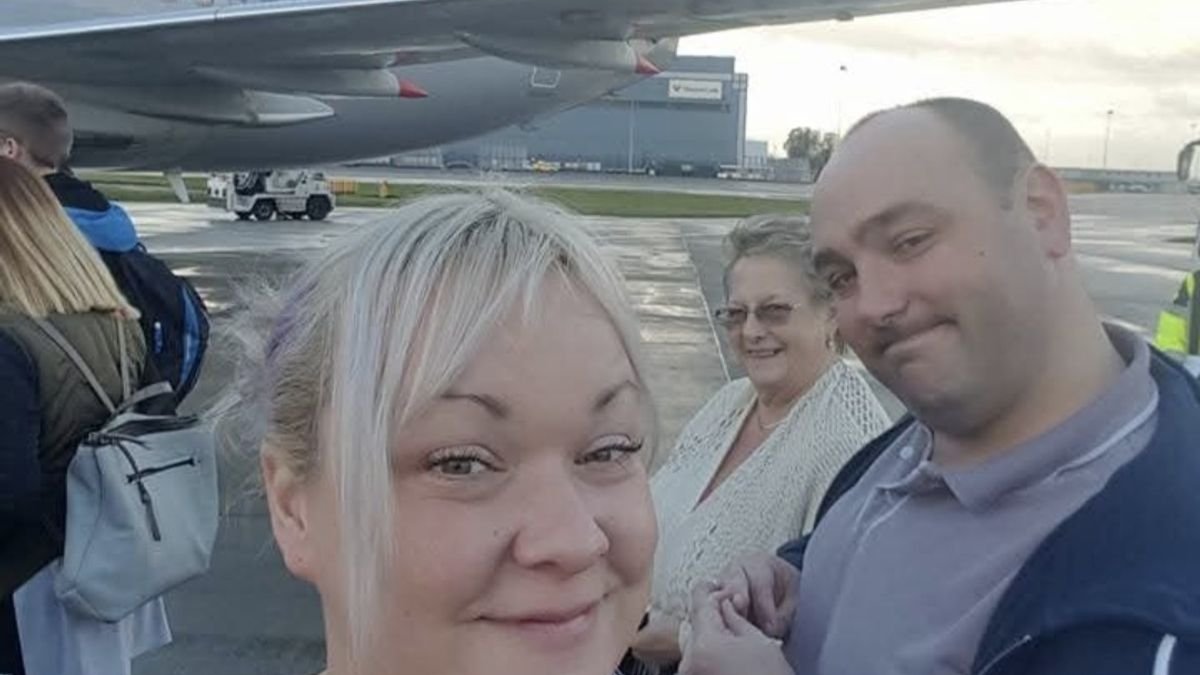

A mother shared her experience of losing consciousness on a plane and subsequently being diagnosed with an extremely rare condition that affects only 100 individuals worldwide.
Nia Jones was preparing to travel to Barcelona for a short city getaway after recently returning from a fast-paced trip to Paris with her daughter when she suddenly started shaking uncontrollably.
She passed out and regained consciousness in the aircraft’s aisle with a severe headache before being taken to the hospital following an emergency landing in France.
This alarming incident led to months of medical mysteries for Nia, culminating in a diagnosis of multiple endocrine neoplasia type four, a rare form of tumor.
The mother from Ruthin, Wales, recounted her disorienting experience, remembering waking up in disbelief in the airplane aisle and questioning the reality of her surroundings. Her partner reassured her of her safety during the chaotic moments before she was transported to the hospital.
Following the plane incident in June 2015, Nia underwent numerous brain scans that failed to reveal any abnormalities. She returned home via the Eurostar, hoping it was an isolated event, only to face further health challenges, including seizures that led to a diagnosis of epilepsy and abnormally high calcium levels.
Subsequently, she was informed of her rare condition, multiple endocrine neoplasia type four, which has fewer than 100 confirmed cases globally. This condition predisposes individuals to develop tumors in endocrine organs, such as the thyroid, pancreas, and ovaries, due to mutations in the tumor suppressor gene.
Upon learning about her diagnosis, Nia was left speechless as medical experts speculated on the potential connection between her condition and epilepsy, considering the impact of high calcium levels on seizure activity.
To manage her condition, Nia underwent surgery to remove three parathyroid glands to regulate her calcium levels effectively, resulting in a seizure-free period ever since.
Recovering her driving privileges and feeling optimistic, Nia emphasized the importance of raising awareness about her rare condition to help others potentially living undiagnosed with similar issues. She underscored the significance of proper treatment in enabling individuals to lead normal lives despite such challenging health conditions.