


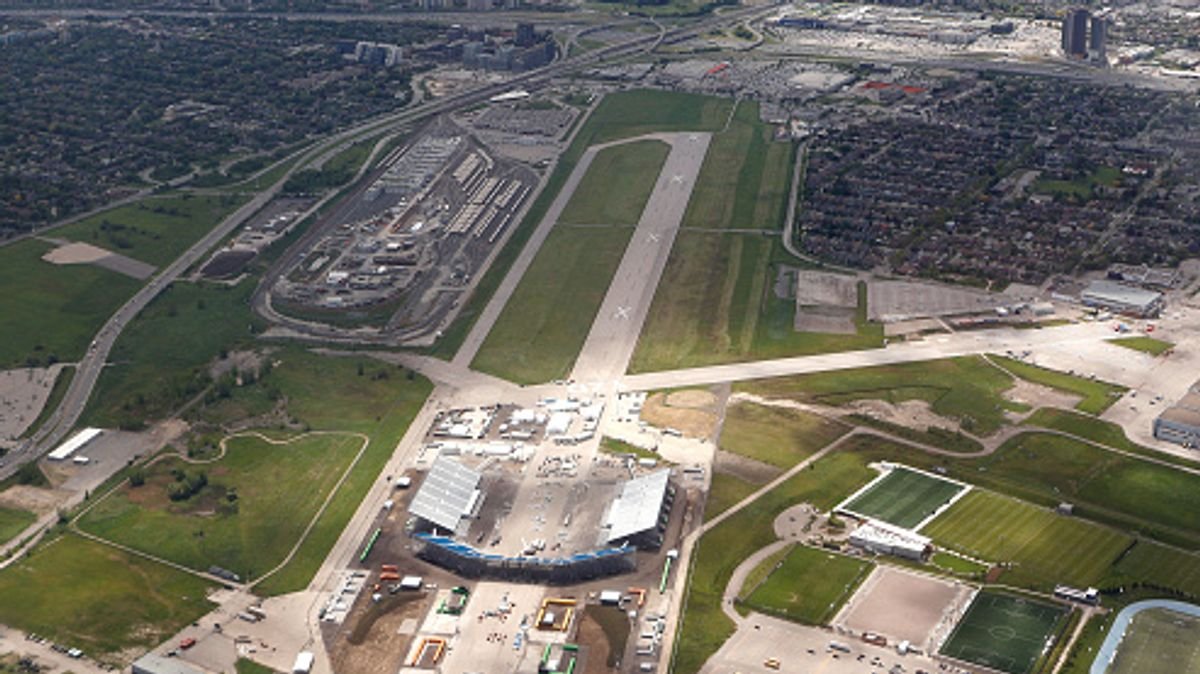

An abandoned airport in Toronto, Canada, is on track to be redeveloped into a new £22 billion city to house approximately 50,000 residents. The former Downsview Airport, which closed its doors in 2024, will undergo a massive $30 billion transformation over more than 30 years, known as the YZD project. This ambitious endeavor will include residential areas, commercial spaces, educational facilities, and green spaces, making it one of the most significant urban renewal projects in North America.
One notable feature of the redevelopment is the conversion of the airport’s 1.24-mile runway into a central park that will link various neighborhoods within the new city, serving as a vital connection point. Recent revisions to the plans for the Downsview West District within the development have refined the concept of a mixed-use community centered around the Downsview Park TTC and GO station.
YZD is described as one of the largest urban transformation projects in North America, with Downsview West being the initial district to progress towards implementation. The project has undergone extensive consultation with stakeholders, resulting in updated zoning and subdivision applications submitted to the City of Toronto in March 2026.
The proposed city layout includes three distinct zones: Station Quarter, Heart at the Crossroads, and the Mews neighborhood, with taller buildings strategically located near transit hubs. The development aims to integrate various architectural elements, including tower placement and materials, to ensure a harmonious urban environment.
The historical significance of the Downsview Airport site, once used for warplane production during World War II and later by an aerospace company, adds a layer of character to the redevelopment. Derek Goring, CEO of Northcrest Developments overseeing the project, emphasized the importance of preserving existing structures to reduce carbon emissions and maintain the area’s unique identity.
The comprehensive plans for the new city encompass around 8,800 residential units, with 20% designated as affordable housing, in addition to commercial, retail, and community spaces. The Depot Mews shared street concept is also set to be a key feature of the development, promoting a pedestrian-friendly environment within the city.