


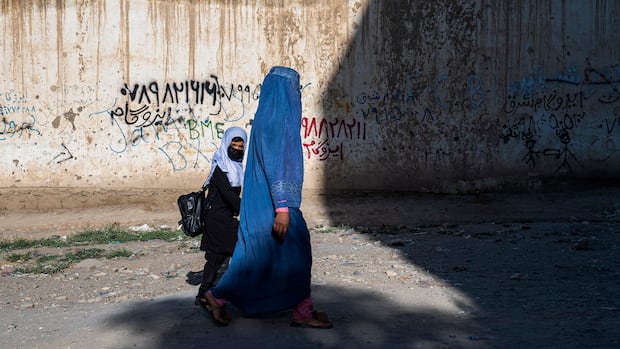

“They make you feel that being a woman in Afghanistan is a mistake,” expressed a young woman in Kabul, reflecting on her life in the capital five years after the tumultuous withdrawal of U.S.-led NATO forces allowed the Taliban to reclaim power in August 2021.
Since that time, under the strict rule of the self-proclaimed Islamic Emirate of Afghanistan, around 22 million women and girls have seen their previously enjoyed rights systematically stripped away.
“It began with a prohibition on schools, followed by restrictions on market visits, traveling, employment, and higher education,” she recounted. “[It feels] as if you need permission just to breathe.”
For her safety, especially considering her previous involvement with Canadian-funded initiatives in Afghanistan, she will be referred to as X.
In the last five years, the Taliban has enacted numerous regulations aimed at further marginalizing women.
Women are not permitted to go outside without a male guardian, are barred from most jobs, and their education is limited to primary school. They cannot visit parks, gyms, or salons, nor can they express their voices in public.
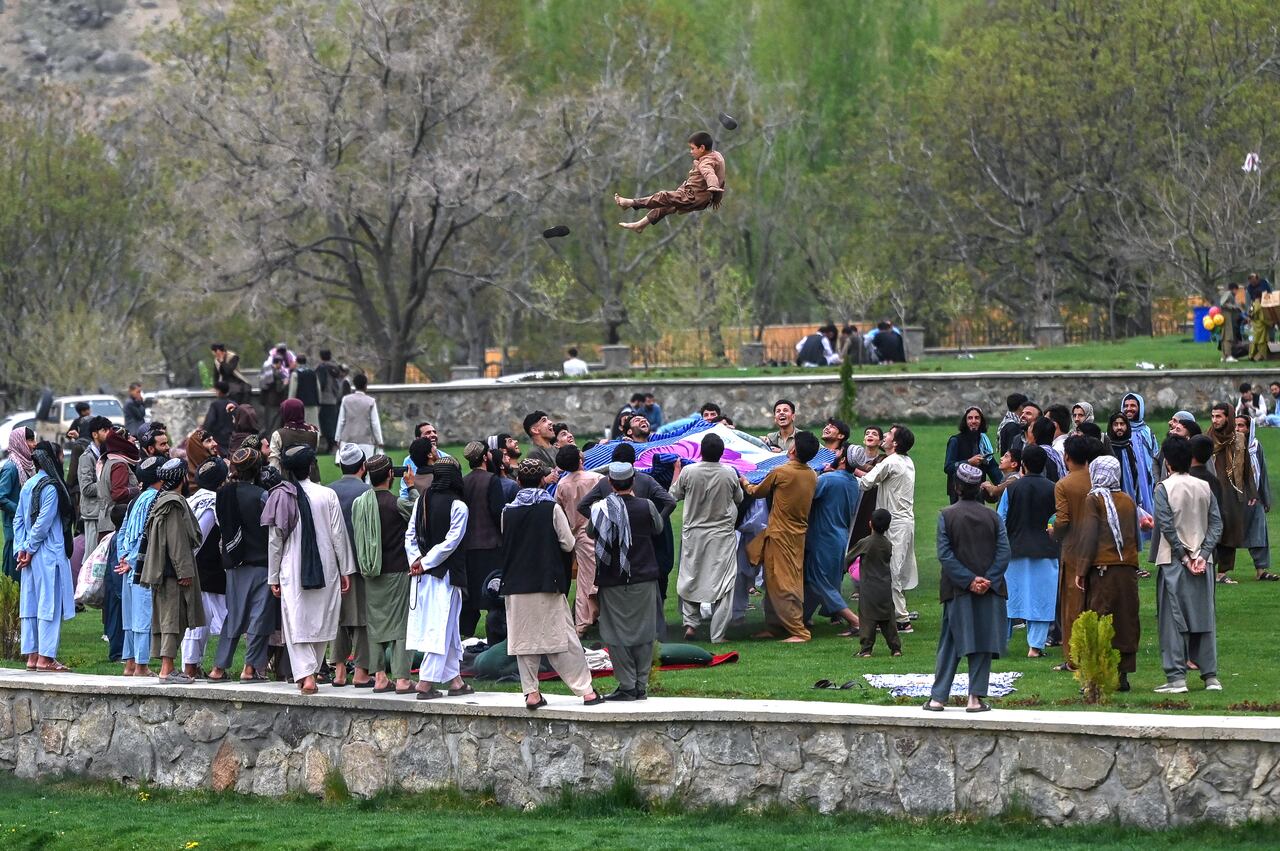
Afghan men throw a boy up in the air as they gather for leisure activities on the outskirts of Kabul on April 18, 2025. (Wakil Kohsar/AFP/Getty Images)
A summer report from UN Women, the UN agency focused on gender equality, revealed that half of Afghan women surveyed were leaving their homes only once or twice a month due to serious restrictions on their movement and access to public areas.
“It feels like living at home with zombies outside,” X explained. “If we step outside, there are countless individuals who can harm us.
“They can detain us simply for not wearing an appropriate hijab. If I step out like this, they will not let me go for even a second,” she said, referring to the light headscarf she wore during our video conversation, with her face visible.
Emotional Pain and Disappointment
This stifling reality is overwhelming for all Afghan women, but for X, it carries additional layers of emotional pain and disappointment.
Before the withdrawal of Western forces from Afghanistan, she was employed by aid organizations backed by Global Affairs Canada (GAC), promoting Ottawa’s goals in Afghanistan, which included empowering women and girls.
Her role was community-facing.
This position made her vulnerable after the Taliban’s takeover. It also qualified her to apply for the Special Immigration Measures Program (SIMs) for Afghans who assisted the Canadian government, launched in July 2021, a step she took alongside thousands of others.
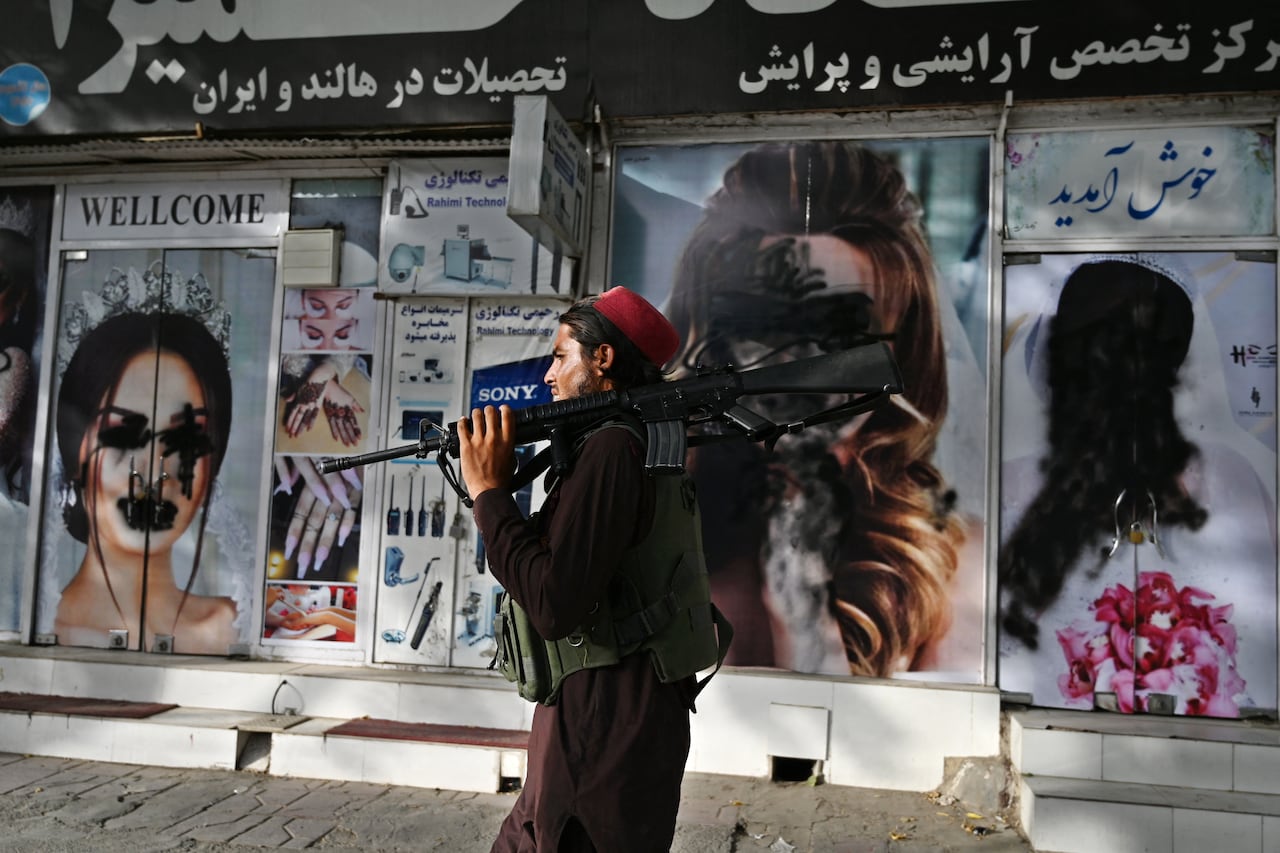
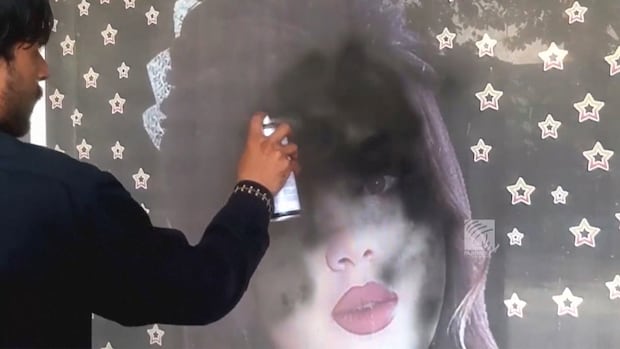
A Taliban fighter walks past a beauty salon with images of women defaced using spray paint in Shar-e-Naw in Kabul on Aug. 18, 2021. (Wakil Kohsar/AFP/Getty Images)
A spokesperson from Immigration, Refugees, and Citizenship Canada reported that the country has accepted 65,540 Afghans under all immigration categories, including the SIMs program, since August 2021.
Among these figures, Canada has authorized 16,560 applications out of 20,605 submitted for the SIMs program, leading to 16,525 individuals arriving in Canada, according to the spokesperson.
One requirement for application was an endorsement from GAC or the Department of National Defence confirming the individual had an “enduring relationship with Canada.”
X received such an endorsement.
‘Full Endorsement from GAC’
“I assure you that your application has been deemed eligible and referred to the appropriate authorities at IRCC,” a development officer from GAC’s Afghanistan program communicated to her.
“I can personally confirm that your case has received the full endorsement of GAC.”
Despite this, X never received an invitation to formally apply to the program from IRCC.
As of fall 2023, she was still awaiting that invitation when I first interviewed her remotely about life under the Taliban.
She had received an acknowledgment of her SIMs application on August 6, 2021, as the Taliban advanced towards Kabul.
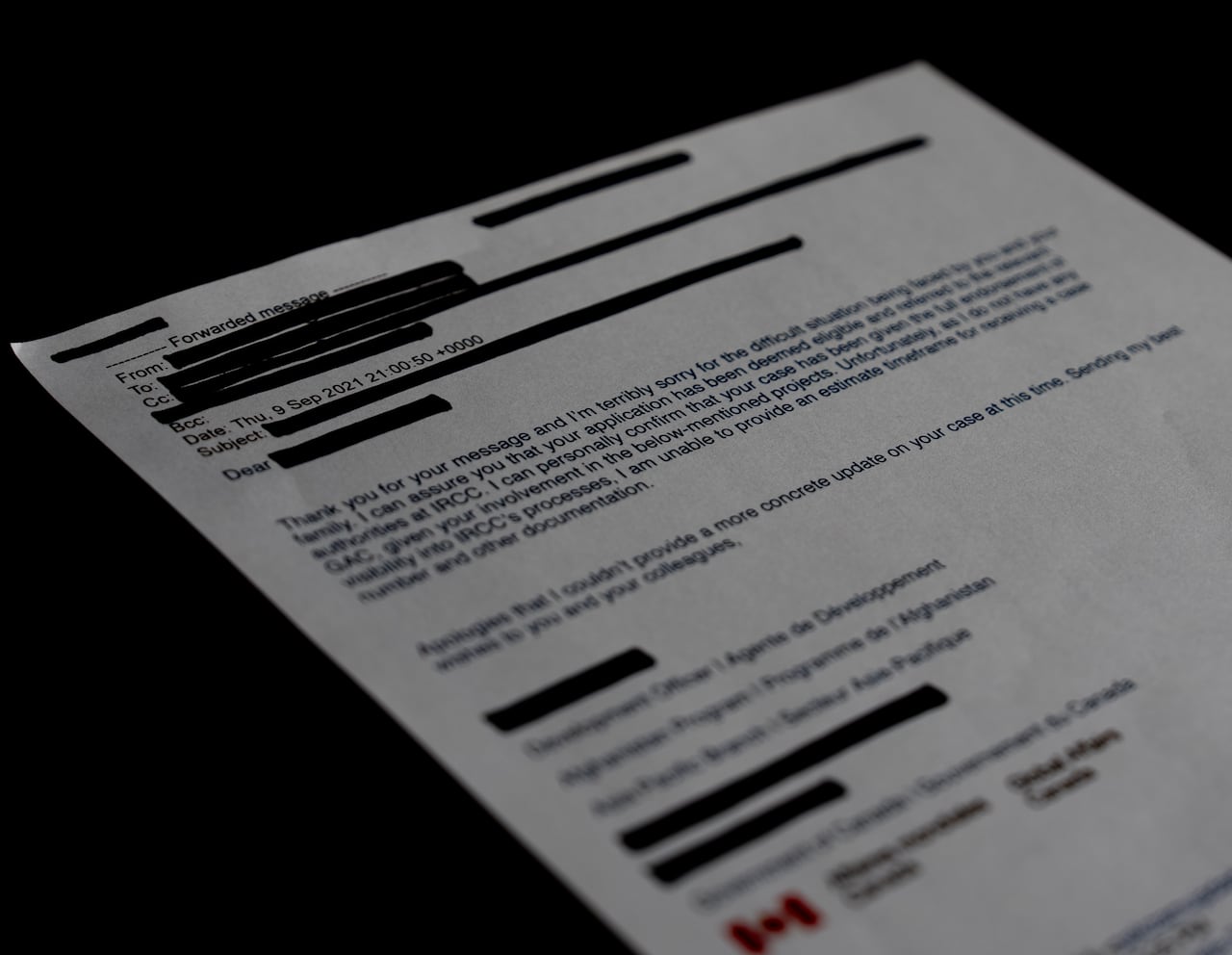
X was entitled to apply for a dedicated Canadian immigration initiative created to resettle Afghan nationals who had a significant relationship with the government of Canada. ‘I can assure you that your application has been deemed eligible and referred to the relevant authorities at IRCC (Immigration Refugees Citizenship Canada),’ a development officer from GAC’s Afghanistan program wrote to her. (Adrian Di Virgilio/CBC)
One year later, after inquiring about the status of her SIMs application multiple times, she received a notification stating that her application had been canceled because she had not been issued an invitation to apply by IRCC.
My inquiries to GAC regarding her situation and the overall system went unanswered.
What Happened to the Applications?
X is not the only one affected.
In 2022, the NDP’s immigration critic at the time, MP Jenny Kwan, claimed that the government had misplaced 2,900 SIMs applications.
There are also numerous accounts of others whose applications vanished within a bureaucratic maze.
A retired Canadian colonel attempting to assist local support staff for the Canadian Armed Forces in Afghanistan reported that applications were lost or went unacknowledged in an overwhelmed IRCC system.
“I truly believed I would not be left behind,” X stated during our recent discussion. “I had faith that the government of Canada would assist me.”
This feeling of abandonment exacerbates the burden she and many Afghans feel toward the international community following the fall of the Western-supported government in Kabul.
For X, this has resulted in depression, with sleep serving as both a symptom and a coping mechanism.
The shock of her future being abruptly curtailed and the devaluation of her past achievements continue to haunt her.
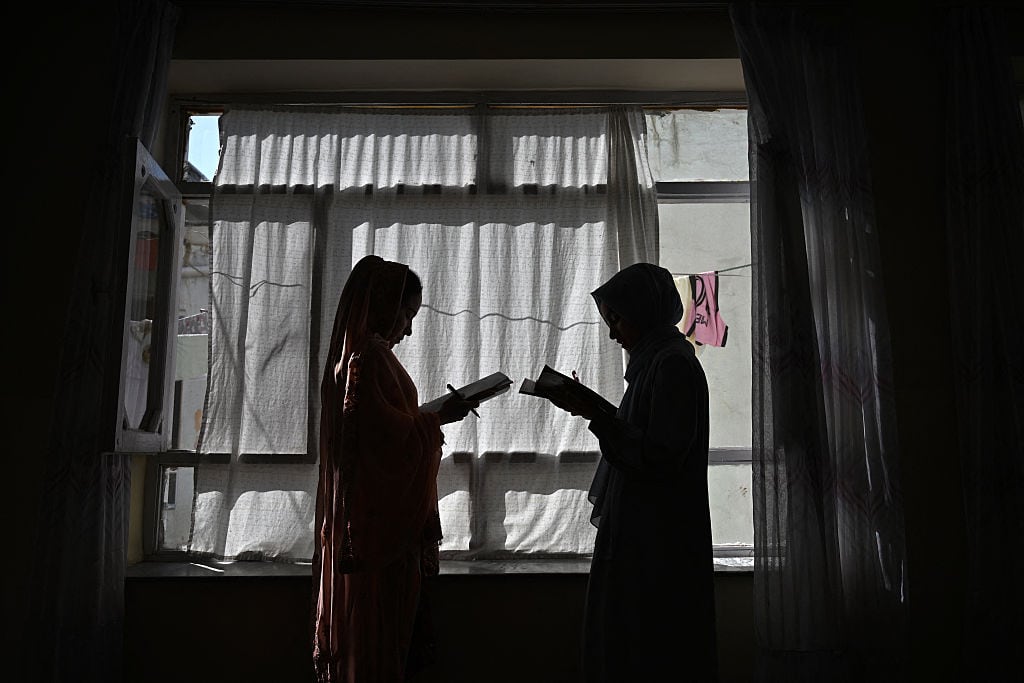
Afghan girls attend a lesson given by their father at their residence in Kabul on Aug. 6. A report by UN Women, the UN body dedicated to gender equality, published over the summer found that half of Afghan women surveyed were only leaving their homes once or twice a month ‘because of severe restrictions on their movement and access to public spaces.’ (AFP/Getty Images)
“Mental health is a joke [in Afghanistan],” she remarked. “I do not only think about myself. I think about every girl who is confined to her home right now.”
A Few Links to the Outside World
X enjoys a more privileged existence than many Afghans. Her family can afford internet access, providing at least a glimpse of the wider world. Additionally, she has continued to pursue online studies in statistics.
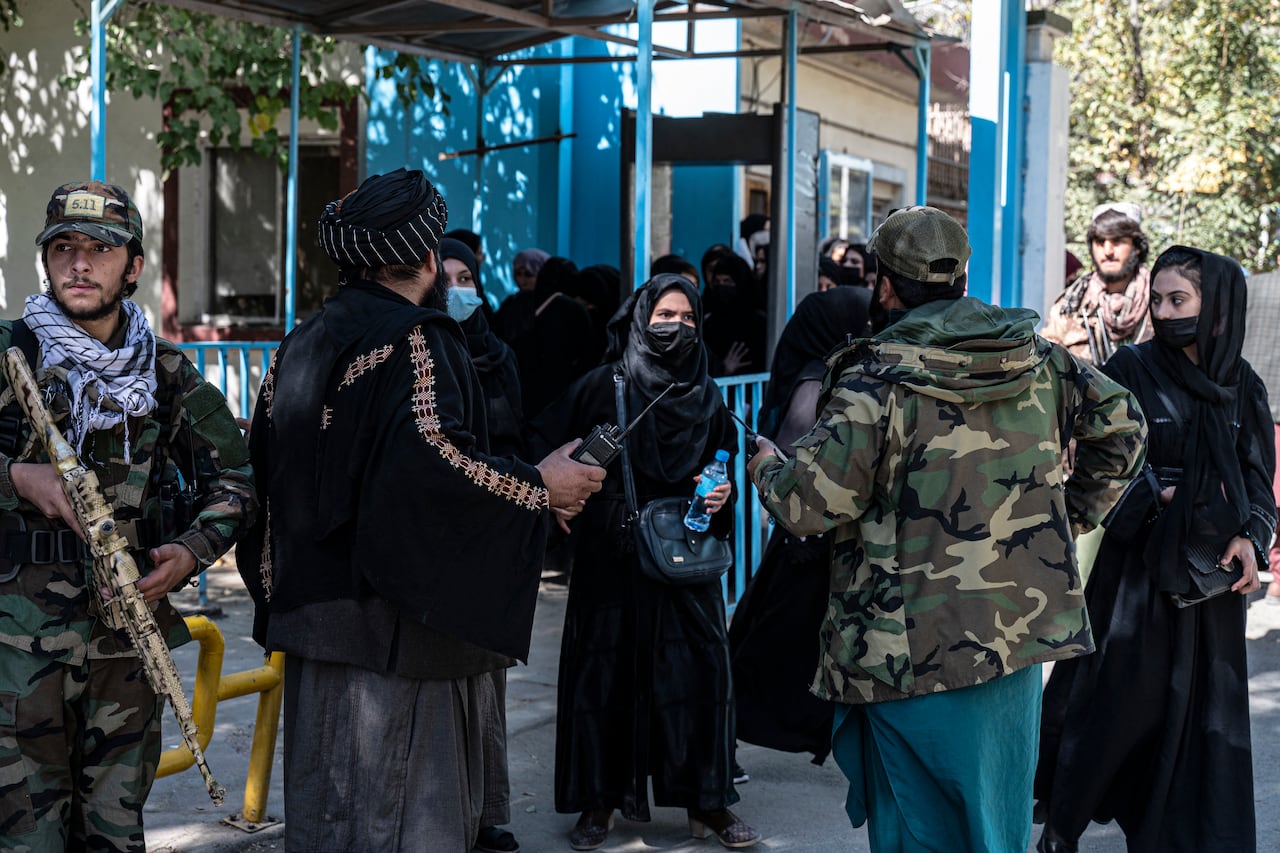
Taliban fighters stand guard as female students arrive for entrance exams at Kabul University on Oct. 13, 2022. The Taliban’s Higher Education Ministry issued an order on Dec. 20, 2022, stating that women’s access to higher education was suspended indefinitely with immediate effect. (Wakil Kohsar/AFP/Getty Images)
She resides with her elderly parents and a sister, but also has a married sister in the U.S. and a brother in Canada, whom X says anticipated she would be able to join him through the SIMs program.
Due to her father’s declining health, he is often unable to serve as the guardian or mahram for the women in the household when they need or wish to go out.
As Afghanistan marks five years since the Taliban retook power, women there tell CBC News about the increasingly harsh oppression they live under — including one woman who continues to study and teach in secret.
She cites her father’s health as a reason for accepting a marriage proposal, a choice she emphasizes was made without parental pressure.
“I have always viewed myself as strong.
But when the outside world treats you cruelly and does not acknowledge your existence, and may even show more respect to an animal than to a woman… it creates a feeling that having a man by your side allows you to go out without fear and gives you someone to rely on.”
Seeking Additional Security
Recent Taliban decrees “place husbands in a position of legal authority over their wives while restricting women’s ability to seek justice,” according to the UN Women report. They also “implicitly permit” child marriage and only penalize violence against women within marriage when it leads to “severe visible physical injuries.”
X hopes that marrying will provide her family with greater security.
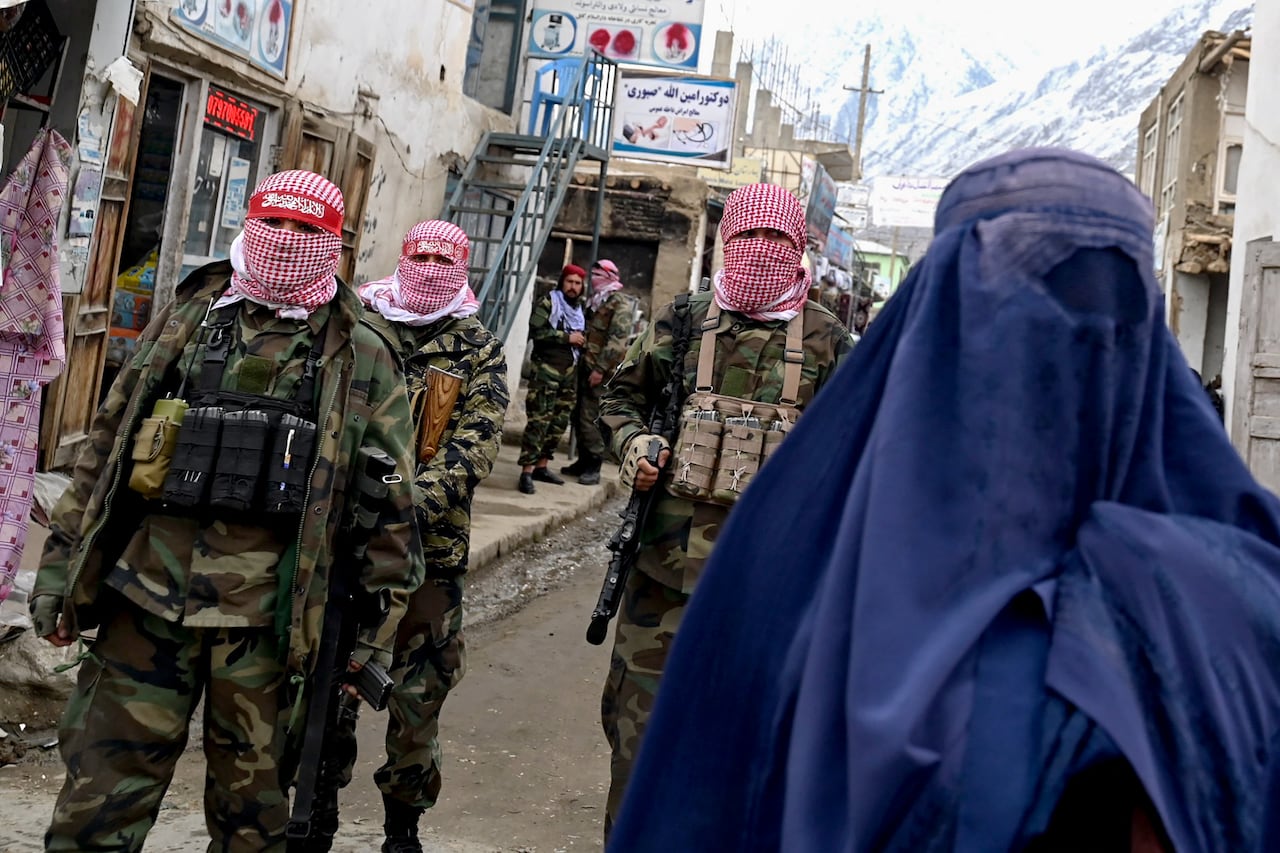
Taliban security personnel stand guard as an Afghan burqa-clad woman, right, walks along a street at a market in the Baharak district of Badakhshan province on Feb. 26, 2024. (Wakil Kohsar/AFP/Getty Images)
“I thought, at least he would be like a son to this family. Since our brother is not present, he will support us.”
However, this does not mean she has abandoned her aspiration to immigrate to Canada.
The Canadian government’s website states that while all spots for the SIMs program have been filled, ongoing applications will still be processed.
Whether X’s name is included in those remains uncertain.
-
Retired major calls on Ottawa to keep promise and bring Afghan man to safety in N.L.
-
Five years after Kabul fell, the reckoning over Afghanistan is far from over
Over the summer, X sent a letter to Canadian Prime Minister Mark Carney and Immigration Minister Lena Metlege Diab.
“Currently, women in Afghanistan are enduring severe restrictions, isolation, and peril,” it stated. “Every day feels smaller, darker, and more uncertain. For someone like me who believed in education, equality, and humanitarian efforts, the risk is not abstract. It is real and immediate.”
“I respectfully urge you to reconsider my case and help ensure that those who supported Canadian initiatives are not overlooked,” she wrote.
“Please do not allow my story to end in silence.”