


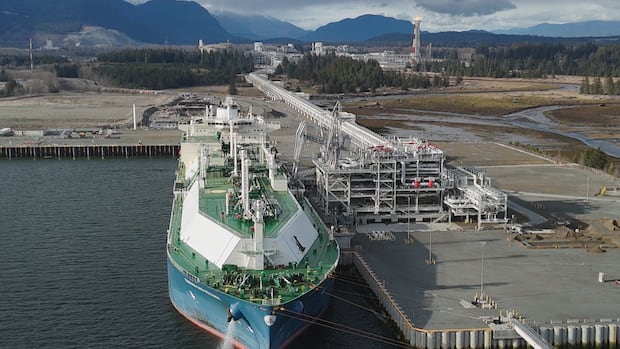

Canada’s sole liquefied natural gas (LNG) facility commenced operations last year, presenting the nation with a chance to enhance this sector and emerge as a leading natural gas exporter globally, as indicated by a recent report.
However, there are numerous challenges to navigate, including a prolonged permitting timeline and a scarcity of project proposals from the private sector.
The federal government has set a target to elevate LNG exports to over 100 million tonnes annually.
At present, there is one operational facility with an annual capacity of 14 million tonnes.
Achieving the federal objective could lead to substantial economic benefits, according to a report published on Thursday by S&P Global, including the creation of nearly 250,000 jobs each year and close to $1 trillion in investments within the natural gas sector by 2050.
“If Canada can resolve its permitting and cost challenges, it can play a significant role in the global LNG market, which would undeniably be advantageous for the Canadian economy and contribute to diversifying its economic dependencies beyond its southern neighbor,” stated Daniel Yergin, vice-chairman of S&P Global, during an interview with CBC News.
Western Canada is rich in natural gas resources, which can be harnessed at some of the lowest production costs in North America.
Nevertheless, constructing pipelines to transport this gas from Alberta and northeastern British Columbia to the West Coast has proven to be a complicated and costly endeavor.
The Coastal GasLink project, initiated by TC Energy and co-owned by local First Nations, has encountered multiple delays and budget overruns. The initiative has faced opposition from various Indigenous groups and environmental activists, as the pipeline traverses approximately 625 lakes, rivers, creeks, wetlands, and streams in northern B.C.
Some analysts assert that Canada may never attain superpower status in LNG exports due to the persistent difficulties in developing and constructing energy infrastructure. Additionally, there is stiff competition from other nations eager to secure LNG investments, notably the United States.
According to the S&P report, Canada’s permitting procedures have taken 27 months longer than those in Texas, and pipeline construction costs are 160 percent higher.
The federal government has proposed new legislation to expedite regulatory reviews.
Currently, LNG Canada is the only LNG export terminal operational in the country, although six additional facilities are either in construction or development stages. Collectively, these facilities are projected to produce just over 50 million tonnes of LNG annually.

S&P Global vice-chairman Daniel Yergin appears on stage at CERAWeek in Houston on March 10, 2025. Yergin says Canada has many advantages and hurdles to grow its LNG sector. (Kaylee Greenlee/Reuters)
Yergin remarked that one of the industry’s best-kept secrets is the magnitude of Canada’s oil and natural gas reserves and its geographical benefit of a relatively short shipping route to Asia.
“Asian buyers have a strong interest in obtaining LNG from Canada,” Yergin noted, alongside other nations worldwide, especially given the disruptions in the global natural gas market caused by conflicts in the Middle East this year. In Europe, there are rising concerns regarding the high costs of gas for heating homes as winter approaches.
“There is a robust desire for diversification, and a belief that systems must be secure and resilient. A diversified portfolio is necessary, and having resources that do not pass through choke points is advantageous. All these factors highlight the current benefits Canada possesses,” he stated.
According to Yergin, Prime Minister Mark Carney has significant credibility on the global stage, but investors will seek tangible evidence of permitting reforms since prolonged wait times can incur substantial costs for companies.
The demand for natural gas is anticipated to rise in the coming decades due to multiple factors, including the increasing global population and the energy needs of AI data centers and air conditioning systems.
S&P Global reports that Canadian LNG has a greenhouse gas intensity that is 55 percent lower compared to similar projects in other nations.