


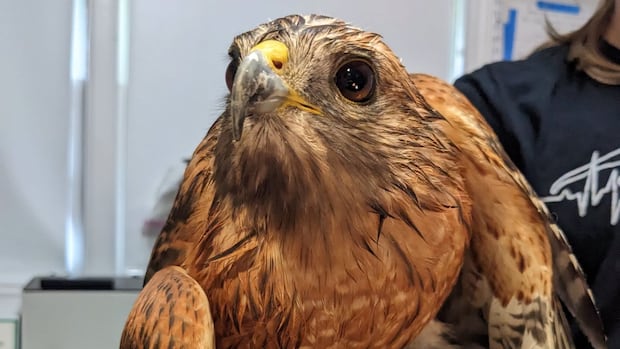

Last month, the Southwest Virginia Wildlife Center received a red-shouldered hawk that was unable to move, leading staff to suspect she might be suffering from blindness, an injury, or poisoning.
This skilled predator should have been flying gracefully and capturing unsuspecting prey, but she was instead discovered lying on her back in a driveway close to Roanoke, Va.
Following a comprehensive examination, including X-rays and blood tests, the veterinary team determined that there were no injuries or medical conditions causing her inability to move.
What they did find was that she weighed 910 grams, nearly double the typical weight for her species.
Katherine McGrath, the operations director at the wildlife rescue, explained to As It Happens host Nil Kӧksal, “[The] hawk’s diagnosis is simply that she’s overweight. She’s our big lady.”

Stuffed with poultry
With the diagnosis in hand, the staff began to investigate how the hawk had become so overweight.
“Wild animals usually do not reach a point of clinical obesity unless they are being fed by humans, so we suspected someone might have been keeping her as an illegal pet or as a falconry bird,” McGrath noted.
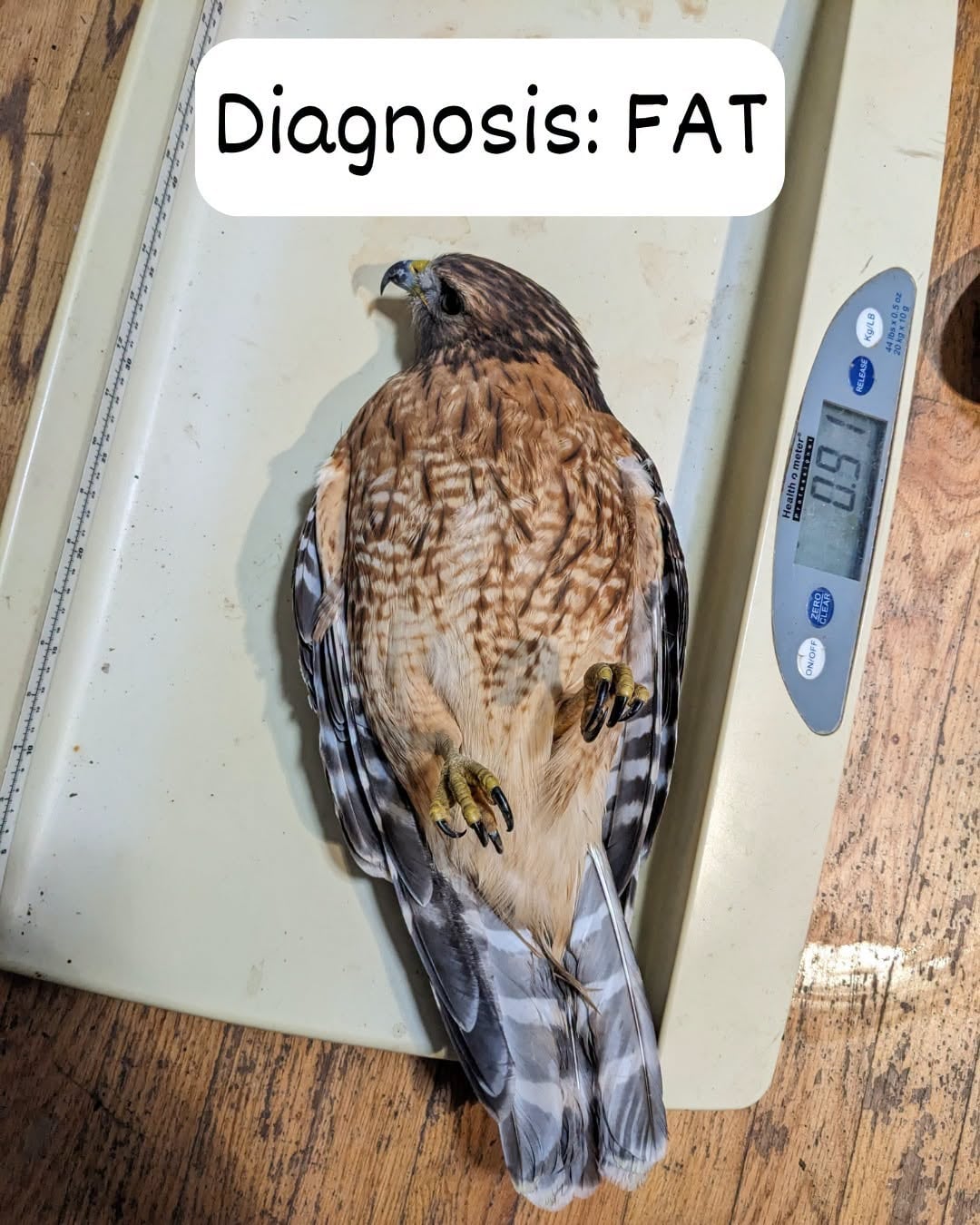
The hawk’s weight was recorded at 0.91 kilograms, or 910 grams, which is roughly two pounds. Typically, members of her species weigh between 500 to 700 grams, according to the Southwest Virginia Wildlife Center. (Southwest Virginia Wildlife Center/Facebook)
They reached out to her finders, who had no knowledge of anyone in the area engaging in falconry or keeping wild birds.
“We then asked, ‘Do any of your neighbors have chickens or other free-roaming poultry?'” she recounted.
Upon consulting their neighbors, the finders discovered that several of them did indeed keep free-ranging chickens, which had been mysteriously disappearing in recent weeks.
“And we thought, ‘Well, we have our culprit,'” McGrath remarked.
‘She’s healthy and frustrated’
According to McGrath, it is not uncommon for a hawk to overeat to the extent that it cannot fly.
Even hawks at a normal weight can become temporarily grounded after consuming a large meal, as their flying ability is delicately balanced.
Furthermore, she explained, hawks lack the ability to recognize when they are full. An abundance of easily accessible prey can lead to overeating.
“Most wild animals will gorge themselves when they have a steady food supply, as they must survive through winter or lean periods,” McGrath said.
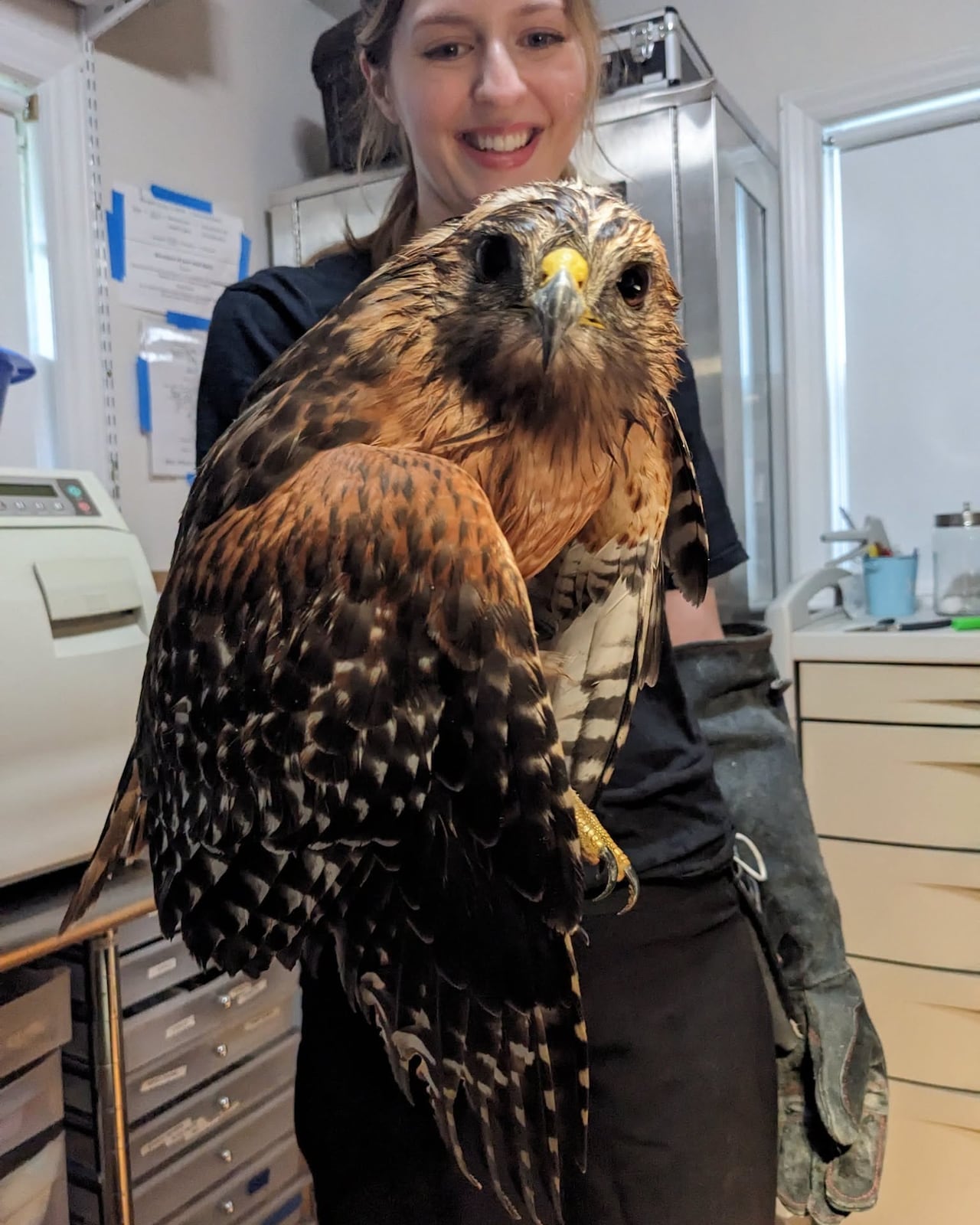
Staff members at the Southwest Virginia Wildlife Center report that this overindulged hawk will soon be ready to take flight again. (Southwest Virginia Wildlife Center/Facebook)
Overall, McGrath stated that their overweight patient is doing quite well.
“She is displaying all the typical behaviors of a red-shouldered hawk,” she noted.
By typical behaviors, McGrath means the hawk is cautious around her human caregivers and visibly upset about being confined.
“She performs what we call the funny chicken dance… where they spread their wings and attempt to kick at you with their feet as a way to push you away,” she explained.
“So aside from her inability to fly, everything about this bird indicates that she is healthy and frustrated, which is exactly what we want to see.”
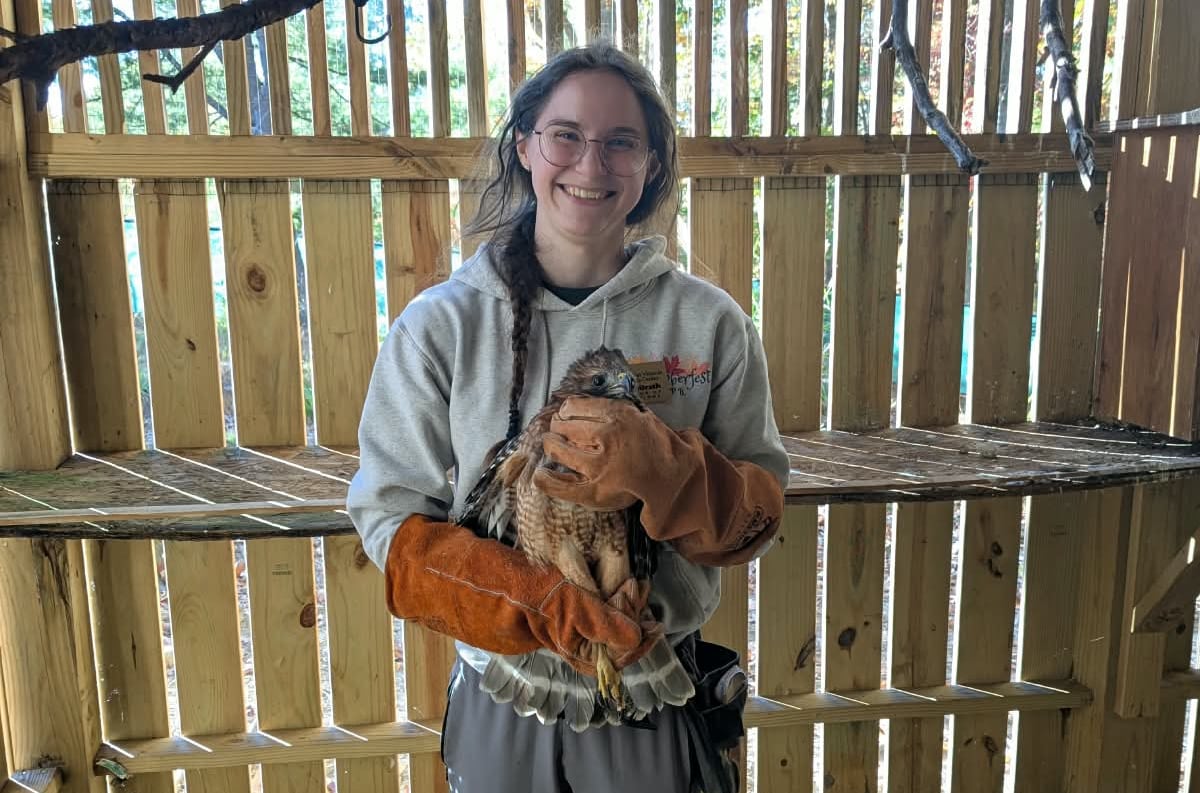
Katherine McGrath from the Southwest Virginia Wildlife Center expressed that she and her team have been ‘delighted’ by their eager guest. (Submitted by Katherine McGrath)
Before long, McGrath anticipates that the impressive predator will be able to soar freely again.
She is already shedding weight and regaining her mobility as staff provide her with a limited natural diet and regular exercise in their enclosure. McGrath believes she will be ready for release in a few weeks.
Prior to her release, McGrath mentioned that the center’s team will notify local residents to give them a heads-up and to request that they keep their chickens contained temporarily.
“We do make an effort to prevent them from encountering trouble again,” she added.