


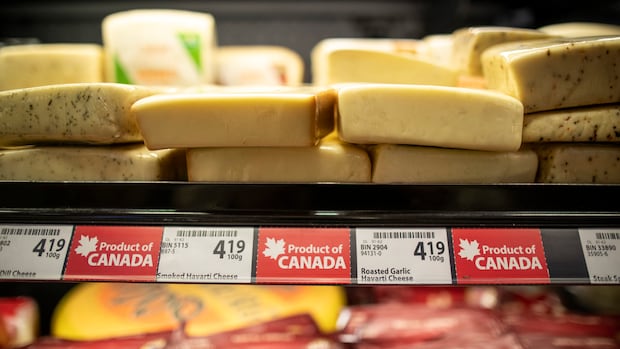

In recent times, Canadian cheese has gained significant recognition in the United States, clinching some of the most prestigious awards in the Western hemisphere.
A pivotal moment occurred in 2024 when Fromagerie la Station from Quebec was awarded best in show at the annual competition held by the American Cheese Society, standing out among hundreds of competitors from both North and South America — a success it replicated the following year.
This year’s awards also prominently showcased Canadian cheeses among the top winners at the event.
James Hanly, sales director for Provisions International in Vermont and an importer for Fromagerie la Station, remarked, “This has really caught the attention of American consumers and industry professionals who previously overlooked it.”
The series of accolades has sparked excitement among importers eager to introduce new artisanal cheeses from Canada that have not previously been available to consumers, according to Hanly.
“People are thrilled about discovering something new that is also proven to be high quality and tasty,” he stated in a conversation with The Current.
However, the imposition of 50 percent tariffs on specific dairy products, including Canadian cheese, by Trump is posing a serious threat to this positive trend.

Canadian cheese has been winning big prizes and flying off American store shelves, but a 50 percent tariff is threatening that momentum. American cheese importer James Hanly and Ontario goat cheese maker Mark Anderson on how the trade war is hurting them – and the farmers who supply the milk.
Since the tariffs were enacted in August, Hanly noted that the demand for Canadian cheese has decreased due to the rise in prices.
“When prices escalate to a point where customers refrain from purchasing, the cheese shop or market will stop stocking it as well, leading to a loss of shelf space,” he explained.
Trump has consistently criticized Canada’s dairy sector and its long-standing supply management system, describing it as detrimental to American dairy farmers, and claiming that Canada prevents U.S. dairy from entering its market.
Nevertheless, Hanly argues that the operational structure of Canada’s dairy industry is a key factor in the superior quality of its cheese.
Canada uses a dairy quota system, which means producers are not compensated for producing excess milk.
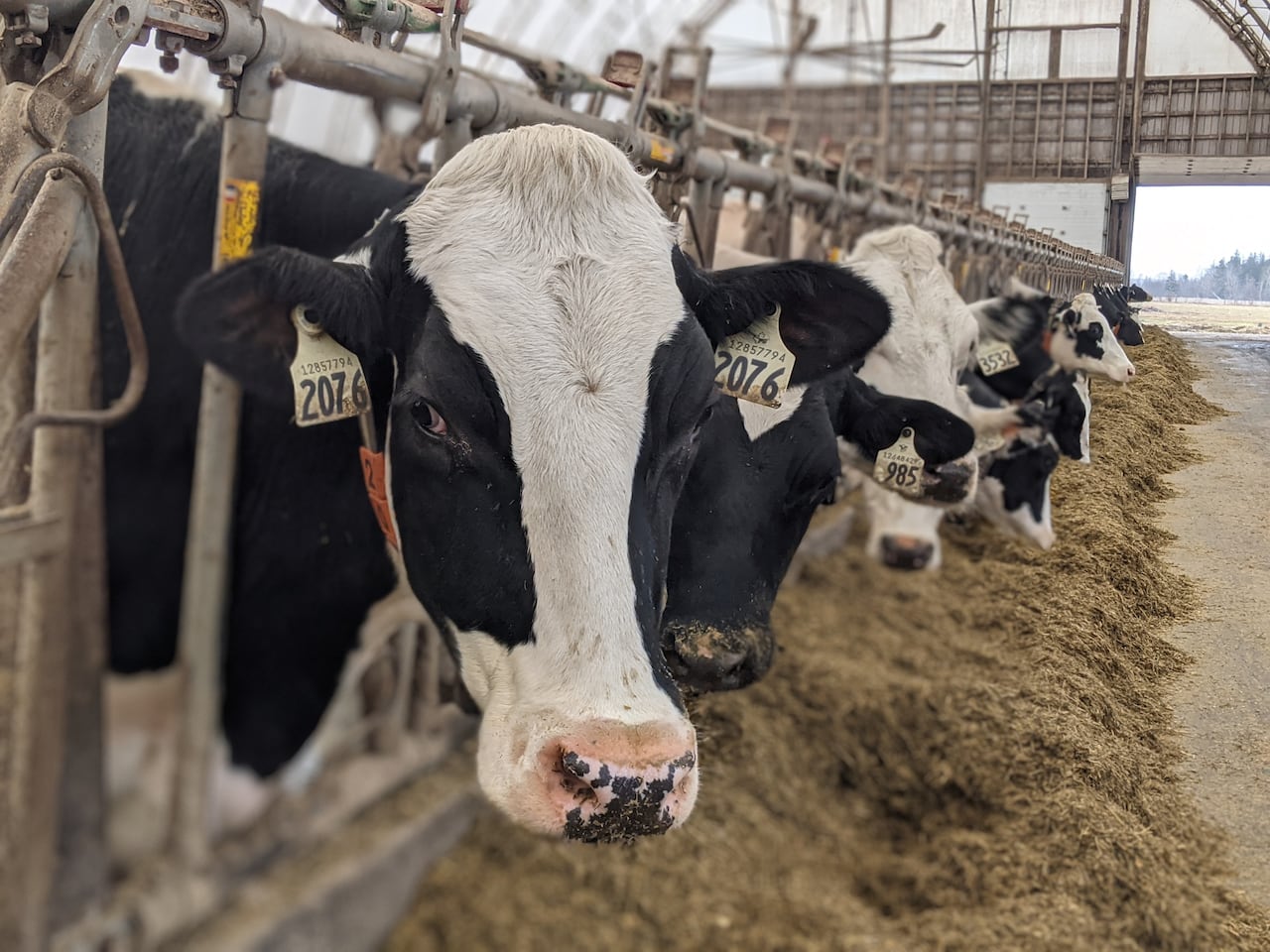
Following their sweep of the midterm elections, Democrats say they’ll work to revoke Trump’s tariffs against Canada, which include a 50 per cent levy on certain dairy products. (Shane Hennessey/CBC)
“In the U.S., it has become a race to minimize costs by maximizing milk production, which ultimately results in lower quality milk unsuitable for cheese making,” he stated.
“In contrast, Canada’s closed system allows family farms to flourish, providing predictability in their income, which contributes to the stability and quality of milk used for cheese.”
No other markets
The tariffs are significantly impacting Mark Anderson, CEO of Mariposa Dairy in Lindsay, Ontario, which has produced multiple award-winning cheeses recognized by the American Cheese Society in recent years.
With nearly 80 percent of their products exported to the U.S., the tariffs are jeopardizing his business and the livelihoods of the 200 dairy goat farmers who supply them.
“We can’t simply stop taking their milk. Those farmers rely on us to process their milk into cheese and distribute it. We lack alternative markets that can handle such volume like the U.S. does,” Anderson stated while speaking to The Current.
-
Facing a potential $40M US tariff bill, this American importer is suing Trump to end some tariffs on Canada
-
Trump to swap some tariffs on Canadian goods amid midterm pressure
“Thus, we are compelled to keep our products available and navigate through these tariffs,” he added.
In order to avoid passing on extra costs to consumers, they have sought ways to absorb these expenses by collaborating with their farmers and distributor, Gellert Global Group.
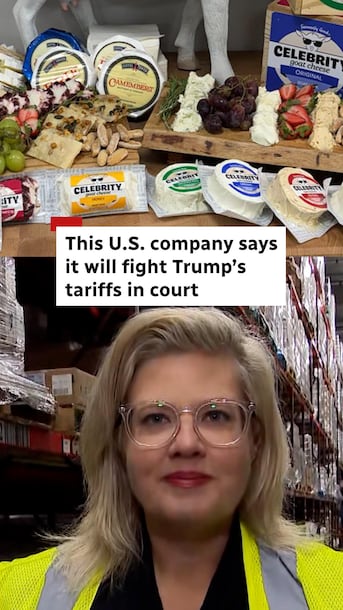
A U.S. food importer facing a tariff bill for possibly as much as $40 million U.S. for the year on some Canadian dairy products is fighting back. After losing faith a trade deal could be reached, Thomas Gellert, CEO of Gellert Global Group, says the company has decided to sue the U.S. government to try to end the tariffs and get refunds.
“We’re distributing the burden so that everyone can endure a bit of the hardship, allowing us to last a bit longer until this situation is resolved,” Anderson expressed.
Confronted with nearly $40 million in tariffs on approximately $80 million U.S. worth of Canadian cheese imported annually, Gellar Global Group is currently engaged in legal action against the Trump administration to challenge some tariffs on Canadian goods.
Anderson mentioned that the potential costs from these tariffs for his business are “not too far off” from that $40 million figure as well.
“It’s astonishing. It’s unsustainable,” he remarked.
Nevertheless, with the Democrats’ recent victories in the midterm elections, both Hanly and Anderson expressed optimism that a change might be on the horizon.
Senior Democrats have indicated that the party intends to work towards eliminating Trump’s tariffs on allies, including Canada, once they assume control of Congress next year.