


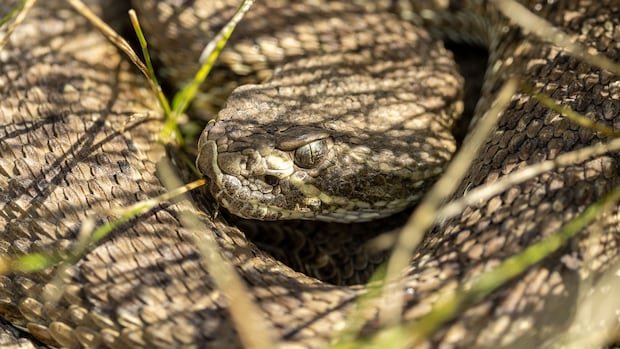

In Lethbridge, the resident rattlesnake wrangler, Ryan First Diver, has been kept busy this year. Responding to the majority of calls received from the City of Lethbridge’s hotline concerning snakes on public property, First Diver is an integral part of the city’s rattlesnake mitigation program. This program aims to relocate snakes from public areas to their natural habitats, including den sites, wintering spots, and birthing grounds.
Since the beginning of the year, a total of 211 snakes have been relocated, encompassing various species like rattlesnakes and bullsnakes, which can be mistaken for their venomous counterparts. Describing this year as an “all-time record,” First Diver shared this information with CBC News.
City officials noted that Lethbridge typically receives around 150 to 160 snake-related calls annually. Dave Henley, a senior bylaw officer with the City of Lethbridge, emphasized the increasing awareness among residents about snakes, attributing this awareness to First Diver’s social media posts.
Residents are now actively involved in educating others about snake encounters and where to report them, utilizing online platforms for sharing information. If residents encounter a snake and are concerned, they can contact the city’s hotline at 403-332-6806.
Contrary to common misconceptions, experts emphasize that rattlesnakes are not aggressive. First Diver highlighted that snakes generally avoid confrontation and prefer to remain undetected using their camouflage. Additionally, Stefano Liccioli, a senior biologist, confirmed that no fatalities have been reported from rattlesnake bites in Alberta.
In Lethbridge, the rising number of snake-related calls may indicate an increase in snake population or heightened awareness among residents. Liccioli suggested that more snakes in the area could be contributing to the surge in calls. Efforts are underway to study rattlesnake populations in Alberta, with ongoing research aimed at understanding their behavior, movements, and habitat preferences.
As part of conservation initiatives, some rattlesnakes have been tagged with tracking devices to monitor their activities and locate their dens. Liccioli anticipates obtaining comprehensive data on snake population trends within the next decade, enabling better conservation strategies and potential program enhancements to protect these reptiles.