


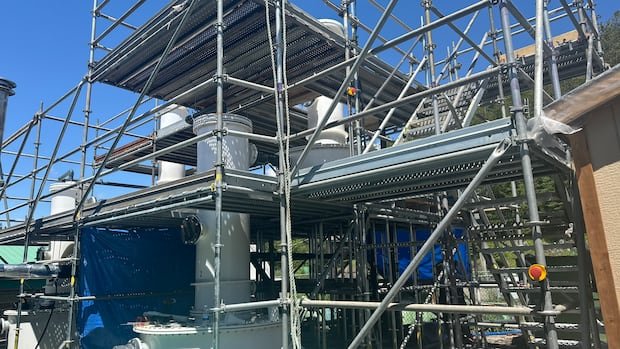

A startup based in Nova Scotia is in the process of developing and testing a new technique to capture and store more carbon in the ocean. The company, pHathom, is working on a pilot facility to demonstrate the effectiveness of its approach.
The ocean has been absorbing approximately 30% of human-induced carbon emissions since the 1980s, making it a significant repository for excess carbon dioxide. pHathom aims to further reduce emissions by capturing carbon dioxide from the atmosphere and transforming it into a form suitable for long-term storage in the ocean.
The company’s method involves replicating a natural process where raindrops absorb carbon dioxide from the atmosphere, becoming slightly acidic. When these raindrops come into contact with alkaline rocks like limestone, a portion of the rock dissolves, converting the carbon dioxide into bicarbonate. This bicarbonate can then be stored in the ocean for thousands of years, effectively removing carbon dioxide from the atmosphere.
To test their approach, pHathom will conduct trials at the Huntsman Marine Science Centre in St. Andrews, New Brunswick. By exposing seawater to the emissions from a biomass power plant in a reactor setup, the water becomes more acidic. Mixing this acidic water with tiny limestone particles converts the carbon dioxide into bicarbonate, which is then reintroduced into the ocean with the same pH level as regular seawater.
The company’s method, which utilizes concentrated carbon dioxide, offers increased efficiency. The pilot project aims to capture 0.1 tonnes of carbon dioxide daily and will involve monitoring the effects on marine species over three months. If successful, pHathom plans to expand its operations with a second test site in Nova Scotia next year.
While other companies in Nova Scotia are exploring variations of carbon removal techniques, pHathom’s innovative approach shows promise in addressing climate change challenges. Despite the potential of these methods, scaling up remains a significant obstacle. Researchers and experts emphasize the importance of transitioning away from fossil fuels and investing in carbon removal technologies to combat the climate crisis effectively.
Furthermore, a Canadian Senate report highlights Canada’s leadership in ocean alkalinity enhancement research and calls for international collaboration on regulatory frameworks. Despite recent policy changes affecting carbon capture projects, optimism remains high that global efforts will eventually prioritize environmental sustainability.