


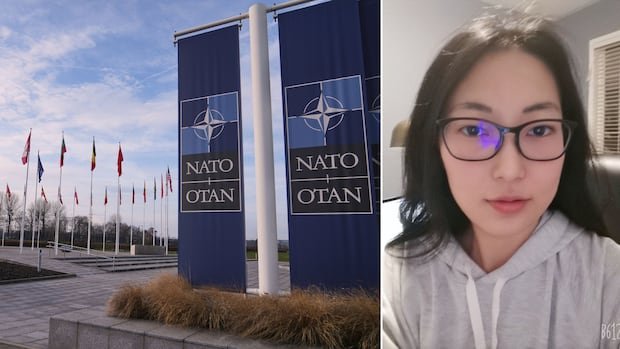

A parliamentary committee in Canada has decided to review the country’s security screening procedures following the arrest of a Canadian NATO intern by Belgian authorities on espionage charges. The move comes after the Conservative and Bloc Québécois parties requested an emergency committee meeting to investigate the spying allegations against the intern.
During a meeting of the public safety and national security committee, Members of Parliament from different political parties agreed to prioritize holding three sessions to delve into the issue when Parliament reconvenes in September. The committee plans to summon Public Safety Minister Gary Anandasangaree and any other relevant witnesses for testimony. Subsequently, it will present its findings and recommendations to the House.
While the identity of the defendant in the Belgian criminal case is usually not disclosed, a CBC News investigation revealed that the accused spy is Biwei Zhang, a systems engineer with an economics background who was interning at NATO’s Supreme Headquarters Allied Powers Europe (SHAPE) in Mons, Belgium.
The investigation found that Biwei Zhang is the legal name of the suspect, who goes by Claire Zhang professionally and Catina Zhang on Facebook. Belgian authorities suspect Zhang of espionage on behalf of a foreign nation and involvement in a criminal group.
Questions have been raised regarding Canada’s security screening processes in light of this case. Conservative public safety critic Frank Caputo urged parliamentary scrutiny into how an individual accused of spying could secure an internship within a crucial military alliance like NATO. Caputo highlighted concerns about the security screening, information sharing, and monitoring protocols in place during the intern’s recruitment.
The NATO internship obtained by Zhang required a thorough security clearance, a process overseen by Canadian authorities such as the RCMP and CSIS due to her Canadian nationality.
After the arrest of the alleged spy by Belgian authorities, Canada’s public safety minister pledged to investigate the matter thoroughly, emphasizing the seriousness of the charges. Prime Minister Mark Carney confirmed Canadian officials’ involvement in the case from the beginning, although he noted limitations on providing details due to the ongoing investigation.
CBC News uncovered that the former NATO intern had previously held positions in various Canadian government departments. Zhang had worked as an economist at Statistics Canada and a systems engineer at the Canadian Space Agency. In 2023, the Public Service Commission of Canada found Zhang guilty of fraud for applying to the Canada Border Services Agency under multiple identities, leading to a judicial review that dismissed her application in 2024.
According to her resume, Zhang also worked at the World Trade Organization in Geneva and the European Space Agency in Italy. She recently completed a master’s degree in computer science specializing in artificial intelligence at the University of Ottawa.
The day before the suspect’s arrest for espionage and involvement in a criminal organization, Belgian authorities conducted searches at Zhang’s residence and workplace at SHAPE, as mentioned in a statement from the country’s Federal Prosecutor’s Office.