


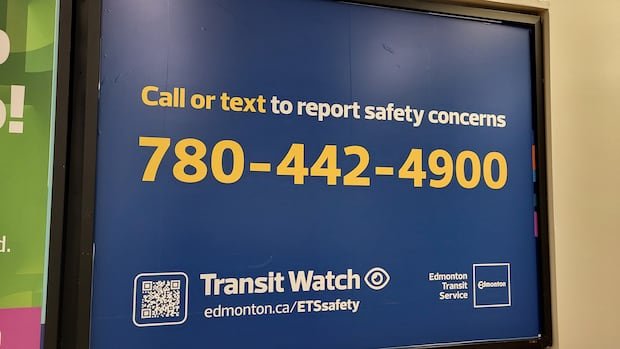

In the early hours of Monday, March 2, an individual using Edmonton’s public transit system was physically attacked while passing through Churchill Station en route to the Valley Line LRT. The rider disclosed in a subsequent text message to Transit Watch, a safety reporting service operated by Edmonton Transit Services, that they had been struck in the face during the incident. The rider explained that they delayed reporting the assault as their immediate priority was to leave the area and return home.
On the same day, Transit Watch received multiple reports from riders detailing incidents of harassment, drug use in public, drug transactions, lighting fires at a bus stop, and a person brandishing a flame lighter within a transit facility. Despite ongoing efforts by the City of Edmonton to enhance safety on public transit through increased hiring of peace officers and police, expansion of outreach teams, and investments in cleaning and security enhancements, text messages received by Transit Watch over a month earlier this year suggest persistent concerns among riders regarding safety within the transit system.
Text messages obtained by CBC News through an Access to Information Act request, covering the period from mid-February to mid-March, highlighted frequent reports of drug-related issues as a major worry for riders. Observations of drug use, including meth, crack, and fentanyl consumption at various transit locations, were commonly reported. Instances of verbal abuse, drug-related harassment, and antisemitic remarks directed at passengers were also documented.
Concerns raised by riders encompassed witnessing drug deals, encountering drug paraphernalia, disturbances like public urination, disruptive behavior, and safety hazards such as broken glass and blood stains in transit areas. The messages also mentioned incidents of fires, physical altercations, and threats of violence at different transit stations.
Regular transit user Katarina Hamilton, who communicates with Transit Watch approximately once a month, described witnessing disruptive behaviors such as fires being set and entrances being blocked, particularly during late night and early morning hours. Hamilton recounted an incident at Central Station a year ago involving a violent altercation she witnessed, prompting her to report the incident to Transit Watch and subsequently to the police, citing concerns for her safety and that of nearby children.
Despite ongoing efforts to address safety concerns on public transit, perceptions of safety among riders have remained stagnant. Surveys conducted by Edmonton Transit System (ETS) indicate that the proportion of riders feeling safe during their transit journeys stood at 61% in 2025, unchanged from the previous year. ETS attributed the challenge of shifting safety perceptions to various factors influencing rider experiences and noted an increase in texts to Transit Watch during colder months.
Data from the Edmonton Police Service revealed a rise in police responses to violent incidents at LRT and transit center locations from 292 instances in 2024 to 307 in 2025, although calls in the current year have shown a decrease compared to the previous year.
To enhance rider safety perceptions, ETS is implementing several initiatives, such as augmenting peace officer numbers and community outreach teams. Additional measures planned for this year include enhancing cellular connectivity in LRT tunnels, increasing rider engagement efforts, offering travel training support, and making infrastructure enhancements at stations. City council member Anne Stevenson emphasized the importance of transit safety initiatives, highlighting ongoing efforts to improve safety through collaborative initiatives and addressing root causes of social disorder.
Experts in transit planning, like David Cooper of Leading Mobility Consulting, acknowledged the widespread challenge of drug-related issues on public transit and emphasized the need for sustained support from governmental partners to tackle the underlying causes effectively. Cooper’s insights underscored the importance of continued efforts to bolster safety measures on public transit systems.