


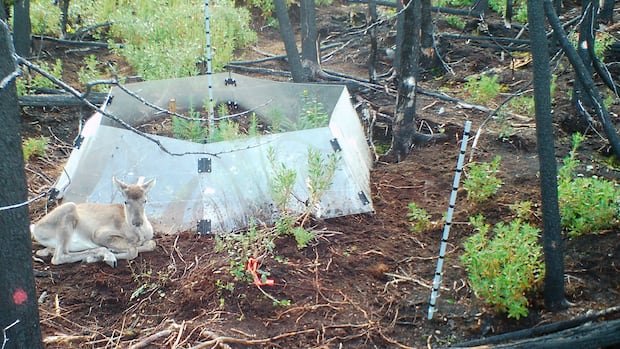

Wildlife researcher Lucas Brehaut’s study on forest regrowth post-wildfire in Atlantic Canada is facing unexpected challenges due to curious animals damaging his equipment. Brehaut, a wildfire research scientist with the Canadian Forest Service, aims to understand forest regeneration under climate change conditions by using open-top chambers (OTCs) to simulate temperature increases. However, animals like moose, bears, and wolves are disrupting his study by destroying the OTCs and even taking temperature sensors.
Despite the setbacks, Brehaut remains understanding, acknowledging that animals are just exploring their habitat. Kaitlyn Gaynor, a professor at the University of British Columbia, explains that animals, like bears, are naturally curious about new objects that could be potential food sources. She suggests minimizing human scent on equipment and camouflaging it to reduce animal interference.
Animal interference in research is a global issue, as Gaynor has experienced in Mozambique with baboons, hyenas, and elephants damaging research equipment. Brehaut has also encountered challenges from human interference, with snowmobiles accidentally damaging his study sites during snowy winters in Newfoundland.
While animal disruptions pose challenges to research efforts, researchers like Brehaut and Gaynor continue their work with resilience and adaptability in the face of such disruptions.