


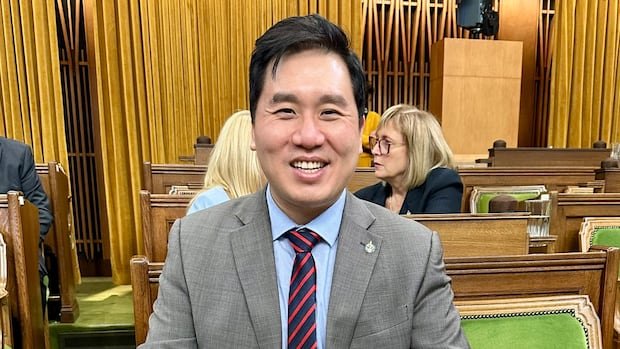

Liberal Member of Parliament Shaun Chen faced allegations online of misconduct after announcing his resignation from the House of Commons. The accusations centered around claims that Chen had voted on legislative matters while in China earlier in the year, a violation of House rules. These claims gained traction through social media posts and were echoed by some Conservative MPs and influencers.
The controversy stemmed from videos posted on WeChat, a popular Chinese social media platform, showing Chen in China on the same day he allegedly voted in the House of Commons. Independent journalist Andy Lee highlighted this discrepancy in a series of posts, raising concerns about potential breaches of national security. Conservative MP John Barlow also joined the discussion, emphasizing the seriousness of the situation and citing parliamentary rules that prohibit MPs from voting while abroad.
Specifically, the allegations pointed to Chen’s supposed participation in voting on Bill C-9, a contentious hate crime legislation, while he was in China. While there were suggestions that the videos may have been edited and posted after Chen returned to Canada, questions persisted about the legitimacy of his voting activity.
According to the House of Commons standing orders, MPs are explicitly prohibited from casting votes while outside the country, with electronic votes restricted to within Canada. The rules also mandate visual confirmation of a member’s identity during voting, using facial recognition technology to verify their presence in Canada.
In response to the allegations, a spokesperson for House Speaker Francis Scarpaleggia emphasized the presence of technical controls and validation processes to ensure MPs are physically in Canada when participating in votes. Chen’s office clarified that he had traveled to China for official parliamentary business with the Canada-China Legislative Association, not to vote remotely from abroad.
Chen’s office provided evidence, including his boarding pass and visa stamps, to support his claim that he did not vote from outside Canada. They attributed his resignation to health issues stemming from a past vehicle accident, which limited his ability to travel to Ottawa as required by his role.
Critics, including Andy Lee, raised questions about Chen’s ability to travel to China despite health concerns preventing regular trips to Ottawa. The trip to China was sponsored by the Hakka Canadian Association, with documented coordination between Chen and House of Commons IT staff regarding cybersecurity measures during his travel.
The Office of Canada’s Conflict of Interest and Ethics Commissioner disclosed details of Chen’s trip, confirming its duration and purpose. Chen’s decision to resign next month was linked to his health challenges and the aftermath of the vehicle accident he experienced last fall.