


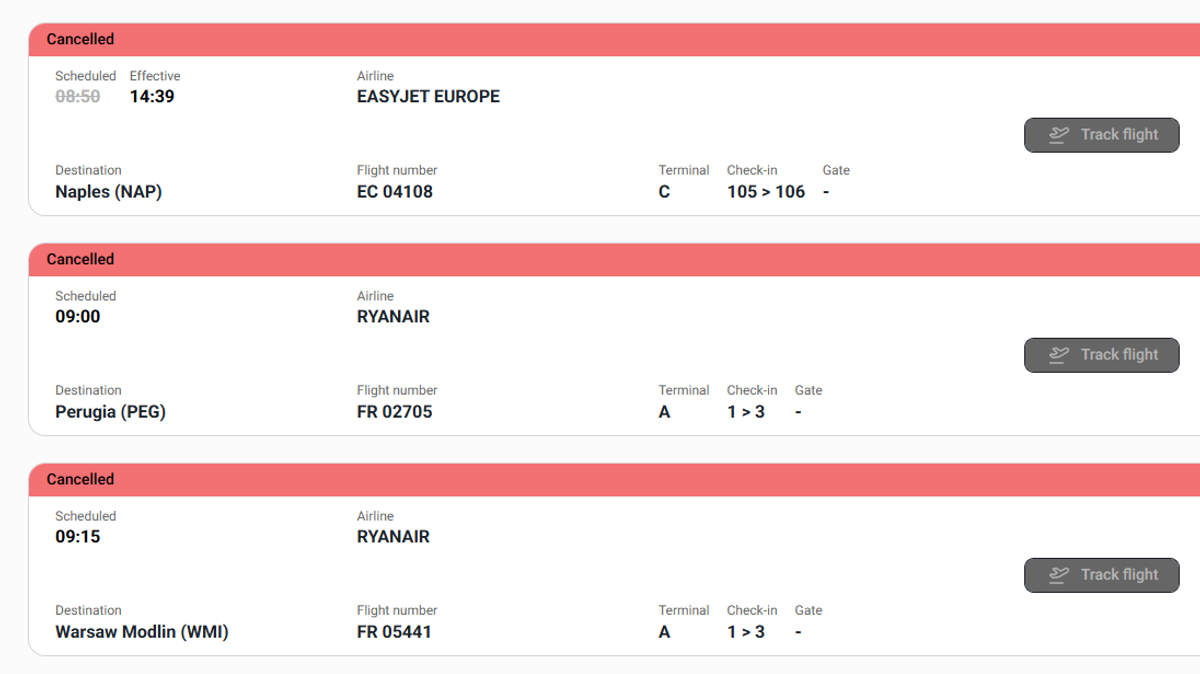

Mount Etna in Sicily has once again erupted, releasing large ash plumes into the sky and causing flight cancellations at Catania Airport. The airport, a popular hub for British holidaymakers, has halted all incoming flights until 2pm today due to the volcanic activity. ITA Airways has confirmed the cancellation or rescheduling of all flights at the airport.
The eruption led Italy’s National Institute of Geophysics and Volcanology to raise the aviation alert level to red after observing heightened activity at Etna. Strombolian eruptions, characterized by explosive bursts of lava and hot rocks, were captured in dramatic images.
The volcanic ash emission began on the upper eastern flank of the Voragine summit crater on Sunday morning, with ash plumes reaching a mile above the crater. Throughout the day, the volcano continued to expel glowing lava fragments into the atmosphere.
Catania Airport has issued a statement advising passengers to check their flight status before heading to the airport, as numerous flights have been diverted, canceled, or delayed. Travelers are urged to stay updated on the situation as the airport remains closed for both arrivals and departures.
The ongoing volcanic activity has led to flight disruptions at Catania Airport, with flights being diverted and rescheduled. Passengers are urged to contact their airlines before traveling to Sicily. Mount Etna’s geological location between the Eurasian and African plates allows magma to rise from the Earth’s mantle, resulting in intermittent volcanic activity.
Despite the volcanic eruptions, the Italian Civil Protection Department reassures that the lava flows from Etna do not pose a direct threat to populated areas, except in rare cases of prolonged eruptions. The volcano’s vents, including those at the summit and various craters, have diameters of approximately 200 meters each.
As Europe’s largest volcano, Mount Etna stands at 3350 meters above sea level and has a base diameter of 35 kilometers. The volcano’s continuous activity and occasional eruptions have shaped the landscape of Sicily over the centuries.
With flight restrictions in place due to volcanic ash, Catania Airport is closely monitoring the situation, and flight operations are subject to ongoing evaluation. Passengers are advised to stay informed about their flights and any updates regarding airport operations.
Palermo Airport has experienced increased traffic as a result of flight diversions from Catania due to Mount Etna’s volcanic activity. The airport’s operations have been busier than usual, accommodating redirected flights from the affected region.
Mount Etna’s volcanic activity, characterized by Strombolian eruptions, continues to impact air travel in Sicily. The volcano’s frequent eruptions contribute to its status as one of Europe’s most active and iconic landmarks, attracting tourists and researchers alike.