


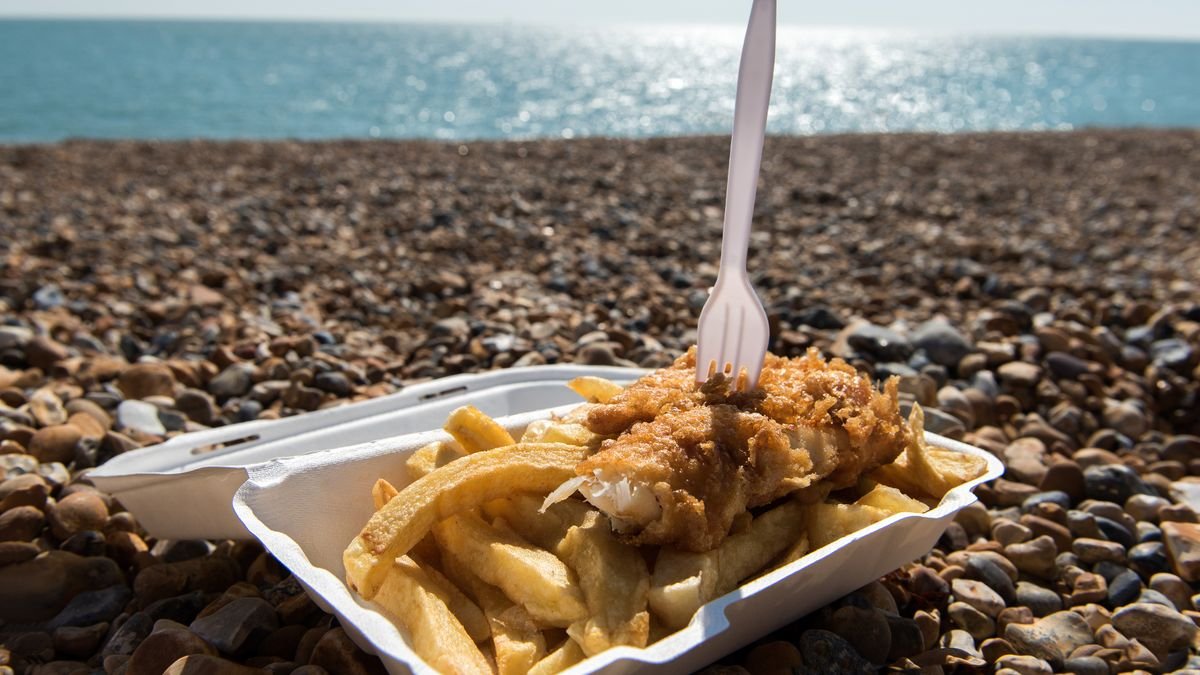

The escalating prices of essential items are leading to a surge in the cost of some of the most beloved dishes in Britain, but experts in the industry affirm that these dishes remain highly popular.
According to Seafish, the average price of a simple cod and chips has climbed to £11.41, while a serving of haddock and chips now costs around £10.29. To cope with the rising prices of fish, potatoes, oil, and energy, restaurant owners are adjusting their menus by introducing new items like kebabs, pizzas, or masala fish, or streamlining their options to enhance efficiency.
Seafish reports that there are approximately 7,210 fish and chip shops operating throughout the UK. The most commonly featured seafood items on menus include cod, haddock, scampi, and fishcakes, with haddock being particularly popular in Scotland, Yorkshire, and the Midlands, while cod remains the top choice elsewhere in the country.
Jennifer Robson, the author of the report from Seafish, stated, “Our findings confirm that fish and chips continue to hold a significant place in British dining culture, enjoyed by millions annually.
“Our research aimed to gain deeper insights into a sector that plays a crucial role in local economies and communities across the UK, providing consumers with a means to savor seafood.
“Furthermore, fish and chip shops play a vital role in introducing the public to a variety of seafood options beyond the traditional cod and haddock, such as lesser-known species like plaice, skate, and pollock, which offer excellent quality and a broader selection.”
Andrew Crook, the president of the National Federation of Fish Friers, commented, “This report is a valuable resource that not only allows us to assess the fish and chip sector but also helps us gauge its economic contribution. It showcases the resilience and adaptability of fish and chip businesses.
“Despite facing challenges, these businesses are evolving in response to shifting consumer preferences and market conditions, all while upholding a culinary tradition that remains integral to British heritage.”
Recent data indicates a slowdown in food price increases, as reflected in the most recent inflation figures. Inflation remained stable last month, with a deceleration in food price hikes counteracting the upward pressure from airfare costs.
The Office for National Statistics reported that the Consumer Prices Index (CPI) inflation rate held at 2.8 percent in May, mirroring the rate from April. This figure was below economists’ expectations of a rise to three percent, indicating that the cost of goods and services continues to rise but at a consistent pace compared to April.
Grant Fitzner, the chief economist at ONS, stated, “Following a slowdown last month, inflation remained steady in May due to various price movements balancing each other out. Transportation costs, including airfares, vehicle taxes, and petrol prices, were the primary drivers of the upward movement in inflation.
<p class="Paragraph_paragraph-text__PVKlh" data-tmdatatrack="content-unit" data-tmdatatr