


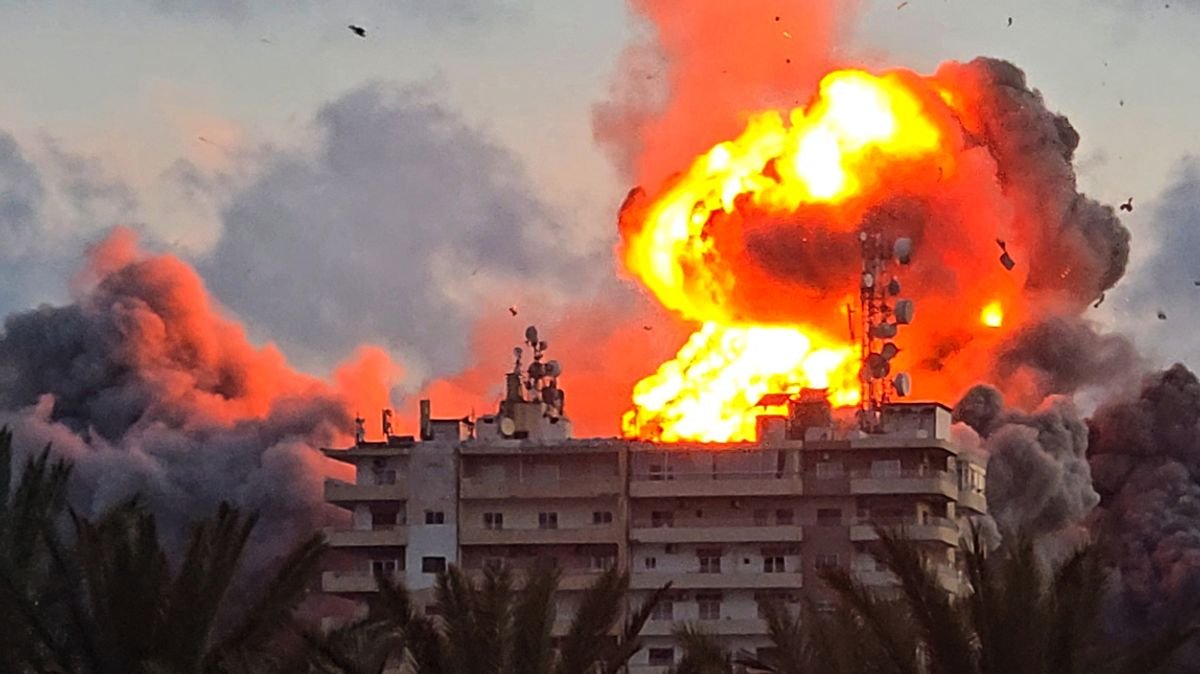

Israeli forces have advanced further into Lebanon in the most recent escalation than in the last 26 years. Prime Minister Benjamin Netanyahu has authorized attacks on Beirut, breaking a fragile ceasefire.
This escalation, causing concerns about a humanitarian crisis, was exacerbated by the resumption of US missile strikes on the Iranian military and Tehran firing on neighboring states. The collapse of Beirut’s unstable ceasefire has cast doubt on the prospects for peace in the Middle East, with peace negotiations hinging on an end to the conflict in Lebanon, as emphasized by Tehran.
Anticipated large-scale airstrikes in south Beirut targeting Hezbollah strongholds have prompted thousands of refugees to flee, worsening an already dire situation. The main focus of the Israeli offensive is expected to be the Beirut suburb of Daraya, one of three key Hezbollah enclaves in the region. Over 1.2 million Lebanese individuals are now registered as refugees due to the ongoing hostilities between Hezbollah and Israeli forces.
In response, Hezbollah has initiated rocket attacks on northern Israel, specifically targeting the city of Haifa. Israeli airstrikes in southern Lebanon resulted in six fatalities, including a Syrian citizen near the town of Nabatiyeh.
The Israeli military reported intercepting two projectiles launched from Lebanon toward Israel. Iran’s Foreign Minister, Esmaeil Baghaei, stressed that a ceasefire in Lebanon is crucial for any potential agreement to end the conflict.
The interconnected nature of the two conflict zones, as highlighted by Iran, underscores ongoing efforts to resolve the war between the US and Iran concerning Tehran’s nuclear aspirations. Israeli troops have captured the symbolic Crusader Beaufort Castle in southern Lebanon, surpassing previous territorial boundaries along the Litani River.
Concerns have arisen over Israel’s intentions to occupy significant portions of southern Lebanon, with Prime Minister Nawaf Salam criticizing Israel for employing a “scorched-earth policy and collective punishment” in the region. President Donald Trump dismissed critics, expressing confidence that the situation would resolve favorably.
He echoed Iran’s willingness to negotiate a beneficial deal for the US, as air assaults between the two nations resumed over the weekend with American forces targeting Iranian missile teams. Kuwait faced threats from Iran’s Islamic Revolutionary Guard Corps, prompting air defense measures against incoming missiles. The IRGC also claimed to have engaged a US airbase, potentially located within Kuwait.
While progress had been made towards a preliminary agreement between the US and Iran to halt hostilities, challenges remain. A proposed deal aims to reopen the Strait of Hormuz, lift the US blockade, and allow discussions on Iran’s nuclear program and US sanctions.
Tehran’s insistence on Hezbollah’s inclusion in a lasting peace agreement contrasts with Israel’s preference for their exclusion.