


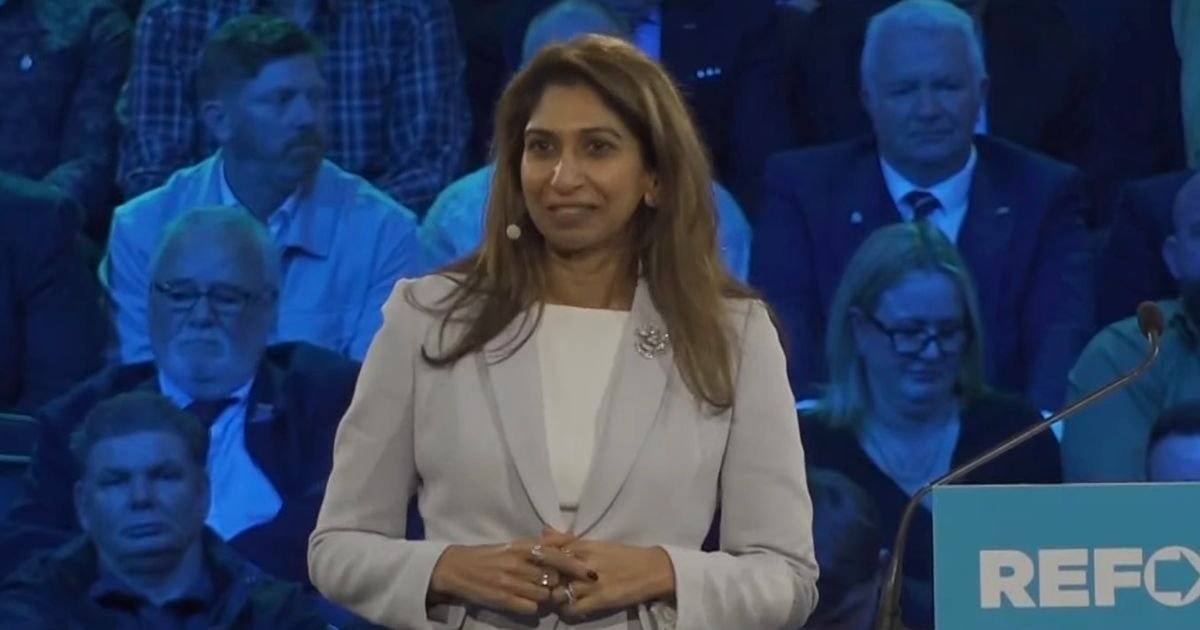

Suella Braverman has switched allegiance to join the Reform party, becoming the latest Conservative party member to do so under Nigel Farage’s leadership.
Having been removed from her position as Home Secretary by two different Prime Ministers, Braverman expressed her sentiment of feeling at home with her new party. She is now a part of Reform alongside former colleague Robert Jenrick, who held the role of Immigration Minister during a period of escalated asylum hotel accommodation.
In a scathing critique of the Tories, Braverman accused them of lacking courage, backbone, and resolve. She highlighted concerns about the state of Britain, pointing out issues such as uncontrolled immigration, struggling public services, a sense of insecurity among the population, and a perceived weakness on the global stage.
Following Braverman’s defection, the Conservative party responded by suggesting that her departure was expected, citing her dissatisfaction within their ranks. They also highlighted her unsuccessful bids for leadership positions within the party and questioned her sudden alignment with Reform.
Labour Party Chair Anna Turley criticized Farage for welcoming former Tories like Braverman into his party, labeling them as responsible for the chaos and decline during their time in the Conservative government.
Braverman, who previously served under three Tory leaders, accused her former party of betrayal and dishonesty. She emphasized what she perceived as a broken state of affairs in the country, touching on issues such as immigration challenges, strained public services, and a lack of national defense.
The Reform party has put forward proposals to prioritize military veterans for roles in law enforcement agencies like the police and Border Force if they attain power. This initiative aims to leverage the unique skills and experience of veterans for public service roles.
Various speakers at a Reform event highlighted the importance of supporting veterans, addressing issues such as legal challenges faced by former service members and advocating for improved healthcare services and government assistance for veterans.
Reform chairman Dr. David Bull criticized the treatment of veterans in the UK, denouncing the government for what he deemed as unacceptable neglect of those who served the country. He emphasized the need to prioritize support for veterans over other policy priorities.
The political landscape is evolving with Reform gaining momentum and positioning itself as a significant player in the political arena. The party’s stance on key issues and its recruitment of former Conservative figures like Braverman and Jenrick are reshaping the dynamics of UK politics.
The Labour Party under Keir Starmer is gearing up for what they term as a crucial battle against the division represented by Reform, emphasizing the need for a patriotic government focused on addressing critical societal issues.
The complexities of political alliances and shifting loyalties are evident in the case of Andrew Rosindell, who switched from the Conservatives to Reform over disagreements regarding government policies on the Chagos Islands. This move has sparked debates and criticisms within the political sphere.
Shadow armed forces minister Mark Francois expressed both support for cross-party collaboration on certain issues, such as veteran welfare, while questioning the Conservatives’ consistency in defending veterans’ rights in Parliament.
The legacy of the Troubles in Northern Ireland continues to impact political decisions, with ongoing debates surrounding legal protections for individuals involved in the conflict. The intricacies of historical justice and reconciliation efforts remain key points of contention within the UK political landscape.