


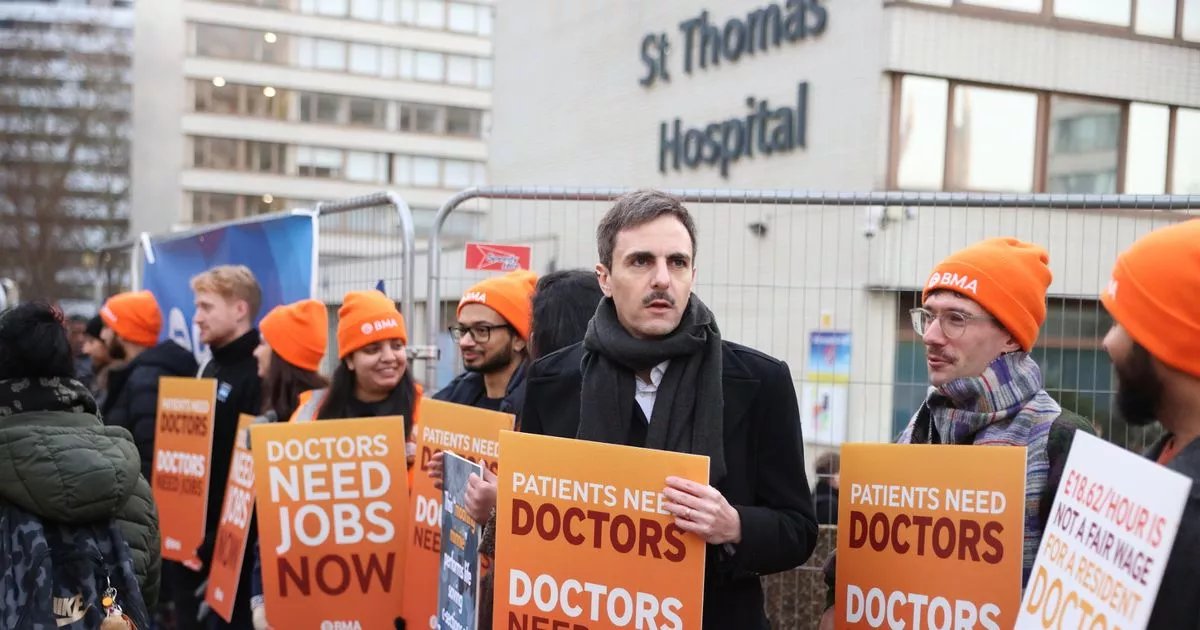

Doctors nationwide have initiated a five-day strike, setting up picket lines outside hospitals despite criticism from the Prime Minister. The walkout by resident doctors, previously referred to as junior doctors, in England is due to ongoing disputes regarding job security and pay. Health Secretary Wes Streeting expressed regret to patients for the disruption caused by the strike, especially during a challenging period marked by an NHS flu crisis and impending Christmas celebrations. Efforts to avert the strike, including last-minute discussions with British Medical Association (BMA) officials, were made by the government.
While health authorities are striving to minimize the impact of the strike, they acknowledge the inevitable disruptions faced by patients as the NHS contends with increased winter pressures and a surge in flu cases. Some doctors have been permitted by the BMA to return to work under unique circumstances, such as in maternity units. Hospitals have been advised to maintain at least 95% of their regular operations during the strike, although this may prove challenging given the seasonal demands and flu-related admissions.
Dr. Jack Fletcher, representing the resident doctors committee at the BMA, expressed willingness to engage in discussions with the Health Secretary to reach a resolution and avoid further industrial actions. Concurrently, hospitals are grappling with a spike in flu cases compared to the previous year, adding strain to an already overwhelmed healthcare system. The strike has generated scenes of picketing outside hospitals, with doctors voicing concerns over pay disparities and job security. The BMA’s demand for a substantial pay raise has led to the rejection of a recent government offer.