


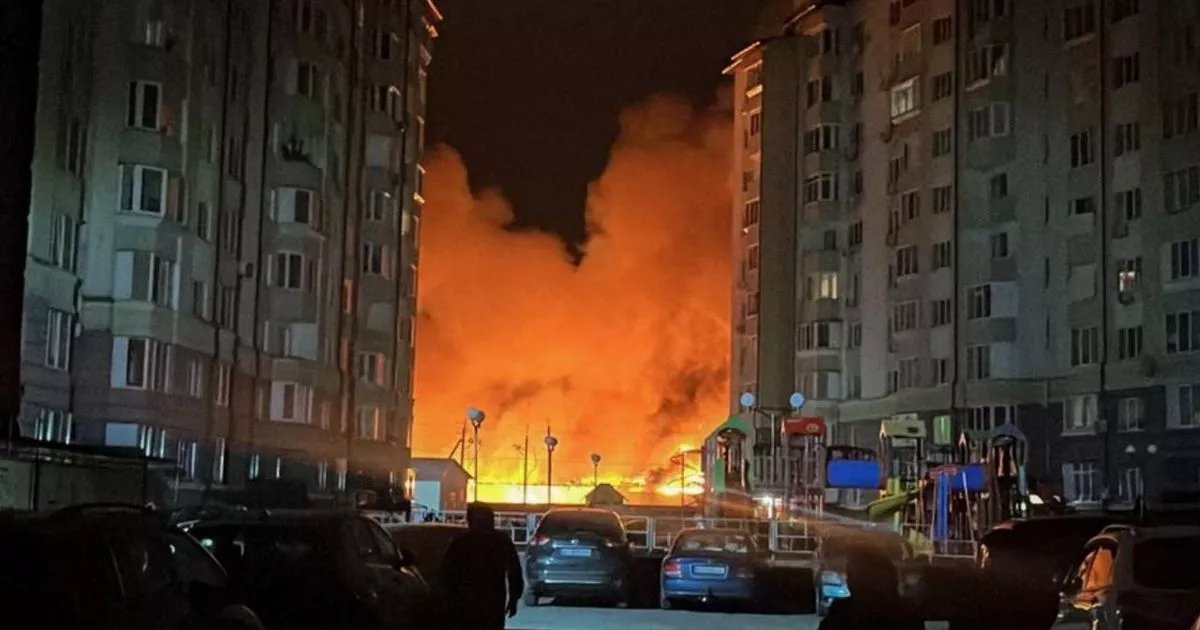

NATO fighter jets were deployed in response to a severe missile and drone attack carried out by Vladimir Putin’s forces during the ongoing conflict. Ukraine experienced power outages and heating disruptions as a result of the assault, with Russia launching 51 missiles and 653 strike drones targeting civilian infrastructure amid freezing temperatures. The city of Kryvyi Rih, Volodymr Zelensky’s hometown, was directly hit, causing damage to homes and a major thermal power plant.
Various critical facilities in the Kyiv region were also struck, including the Bila Tserkva power plant, the Fastiv railway station, and the town of Vyshhorod. The onslaught, estimated to cost £130 million, involved lethal hypersonic weapons like Kinzhals. The attacks aimed to pressure Ukraine into accepting an unfavorable peace agreement, resulting in essential supply disruptions in several regions.
Ukrainian air defenses successfully intercepted 585 drones, 29 cruise missiles, and one ballistic missile. The intensity of the offensive, which involved strategic bomber aircraft, led to Poland activating its military forces and scrambling warplanes to defend against potential threats to NATO territory. Meanwhile, the US and Ukraine engaged in productive peace discussions, while Putin remained focused on weakening Ukraine.
Tragically, a 12-year-old boy lost his life in Dnipro due to the Russian strikes, adding to the toll of civilian casualties in the prolonged conflict. In response, Ukraine targeted a crucial oil refinery to disrupt Putin’s oil operations without harming civilians, resulting in a significant fire at the Ryazan refinery in Russia. Concerns arose about possible US withdrawal from peace talks if Putin continues to resist negotiations.
Despite challenges, Ukraine’s military leadership expressed determination to continue the fight against Russian aggression, emphasizing the importance of ongoing support from allies and European partners in their struggle for justice.